
How often you should worm your dog depends on its age. Worm a puppy every two weeks until twelve weeks old. Then worm it monthly until six months old, and every three months for the rest of its life. Work the dose out from what the dog weighs now, not from its age or its breed.
Those intervals come from the labels on wormers registered for sale in Australia. The Australian Pesticides and Veterinary Medicines Authority approves those labels. This article is for two readers: people with a new puppy, and people whose dog shares parks and trails with a lot of other dogs.
Why puppies need worming every two weeks

Puppies do not pick worms up later. They start with them. The approved label on an Australian puppy wormer says roundworms infect puppies in the mother’s womb. Hookworms and roundworms arrive as soon as the puppy suckles. The University of Sydney’s veterinary teaching hospital says the same in plainer words. Puppies can be infected early in life, including through their mother’s milk.
That is why the first dose is due at two weeks old, before the first vet visit. Hookworms feed on blood. In large numbers they can cause anaemia in a puppy. The labels say to treat frequently until at least twelve weeks of age.
Products differ a little on the exact weeks. One registered liquid wormer names two, four, six, eight, ten and twelve weeks. A registered chew names two, four, eight and twelve weeks. Both then go monthly until six months. Follow the puppy worming schedule on the pack you buy. That is the one the regulator approved for that product.
How often should you worm your dog once it is an adult?

From six months of age, the interval on Australian labels is every three months, or as a vet advises. That is four doses a year. Tie them to dates you already keep, because a dose remembered late leaves months of the year uncovered.
Two cases sit outside that rhythm. Where whipworm has been a problem, labels say to treat every six to eight weeks after three months of age. Pregnant and nursing dogs have their own schedule. It runs at mating, ten days before whelping, then two and four weeks after whelping, then back to every three months.
What does an all-wormer cover, and what does it miss?
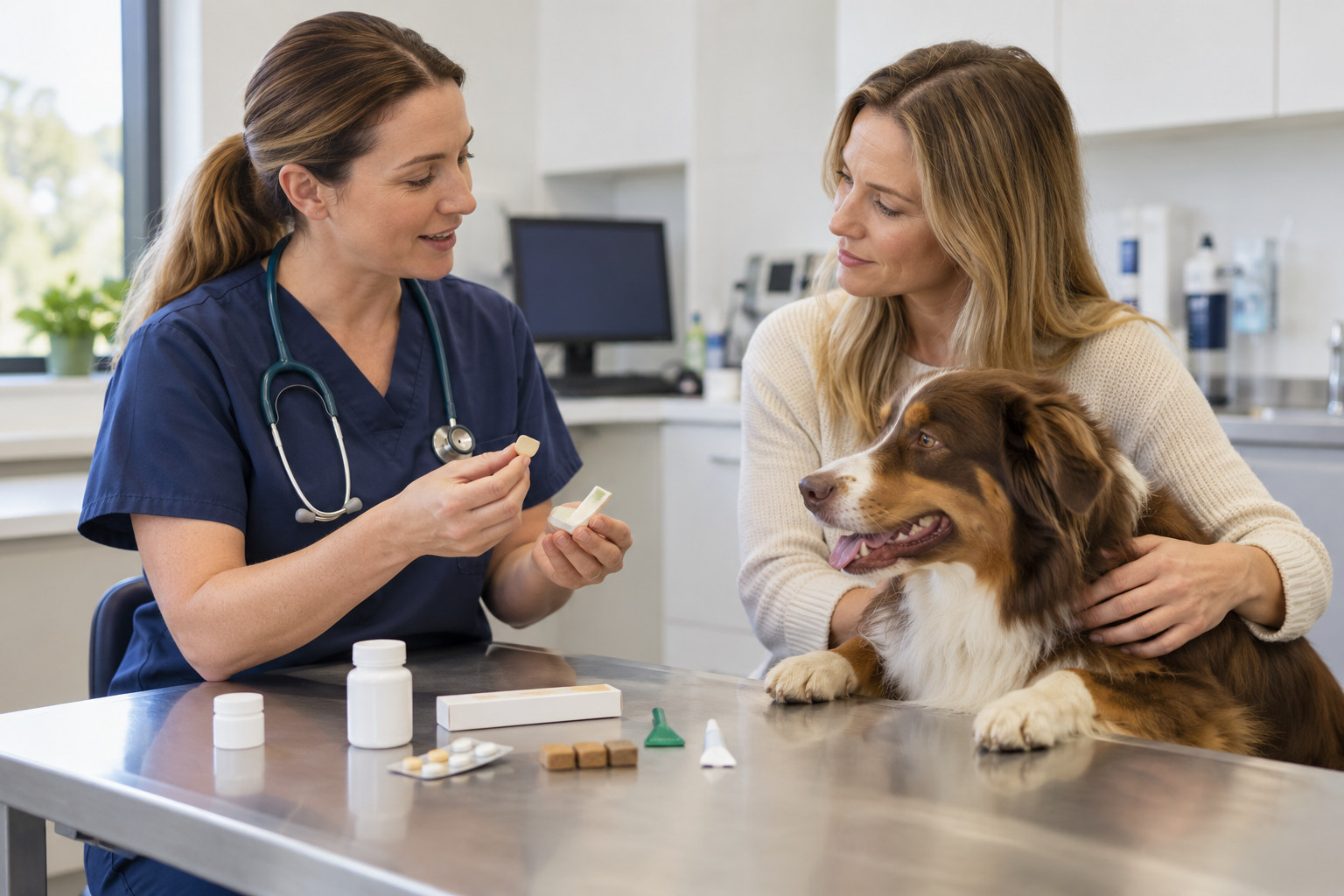
An all-wormer treats the worms that live in a dog’s gut. That means roundworm, hookworm, whipworm and tapeworm. The tapeworms include the flea tapeworm and the hydatid tapeworm.
Most all-wormers do not cover heartworm. Heartworm is spread by mosquitoes and lives in the heart and lungs, so it is not a gut worm at all. The common tablets, chews and liquids say so plainly on the label, so cover for heartworm is a separate product. A few all-wormers do prevent heartworm as well. Their labels say so, and they are dosed monthly rather than every three months. The University of Sydney’s veterinary teaching hospital notes that some longer-acting options last up to twelve months for parasites such as fleas, ticks and heartworm.
The monthly all-in-one chews and spot-ons work the other way round. One dose covers fleas, ticks, mites, heartworm, roundworm, hookworm and whipworm. They also stop flea tapeworm, by killing the fleas that carry it. They do not treat the other tapeworms. One approved spot-on label tells the owner to use a separate tapeworm treatment for that, on a vet’s direction.
So a dog on a monthly all-in-one is covered for most things and still short on tapeworm. That is the gap that catches people out. Check the back of the pack you already use.
Tablet, chew, spot-on or liquid: what suits which dog

Format changes nothing about the schedule. It changes whether the whole dose gets into the dog, which is the part that decides whether the treatment works.
The dog that eats the meat and leaves the tablet on the floor is the reason the other formats exist. If that is your dog, a chew or a spot-on ends the argument.
- Chews are meant to be given from the hand like a treat. One approved label reports that 98 per cent of dogs take it that way.
- Tablets can be crushed and mixed through wet food where a dog is wise to them.
- Liquid wormers go in by mouth with a dosing syringe. They are made for puppies and small dogs.
- Spot-ons go on the skin between the shoulder blades once a month, not in the mouth. One label says the treatment keeps working after a shampoo, a swim or rain.
Can you worm and treat for fleas at the same time?

Yes, for these products. The all-wormer labels say the wormer can be combined with other treatments. They give heartworm prevention and flea or tick treatment as the examples.
Fleas and worms are joined up anyway. A dog gets flea tapeworm by swallowing an infected flea, usually while grooming itself. So the labels say controlling that tapeworm needs control of the local flea population.
The thing to check is overlap. A monthly product may already cover roundworm, hookworm and whipworm. A second product covering the same three adds nothing. Read both labels, or bring both packs in and we will work out what is doubled up.
What changes for a dog in Melbourne?
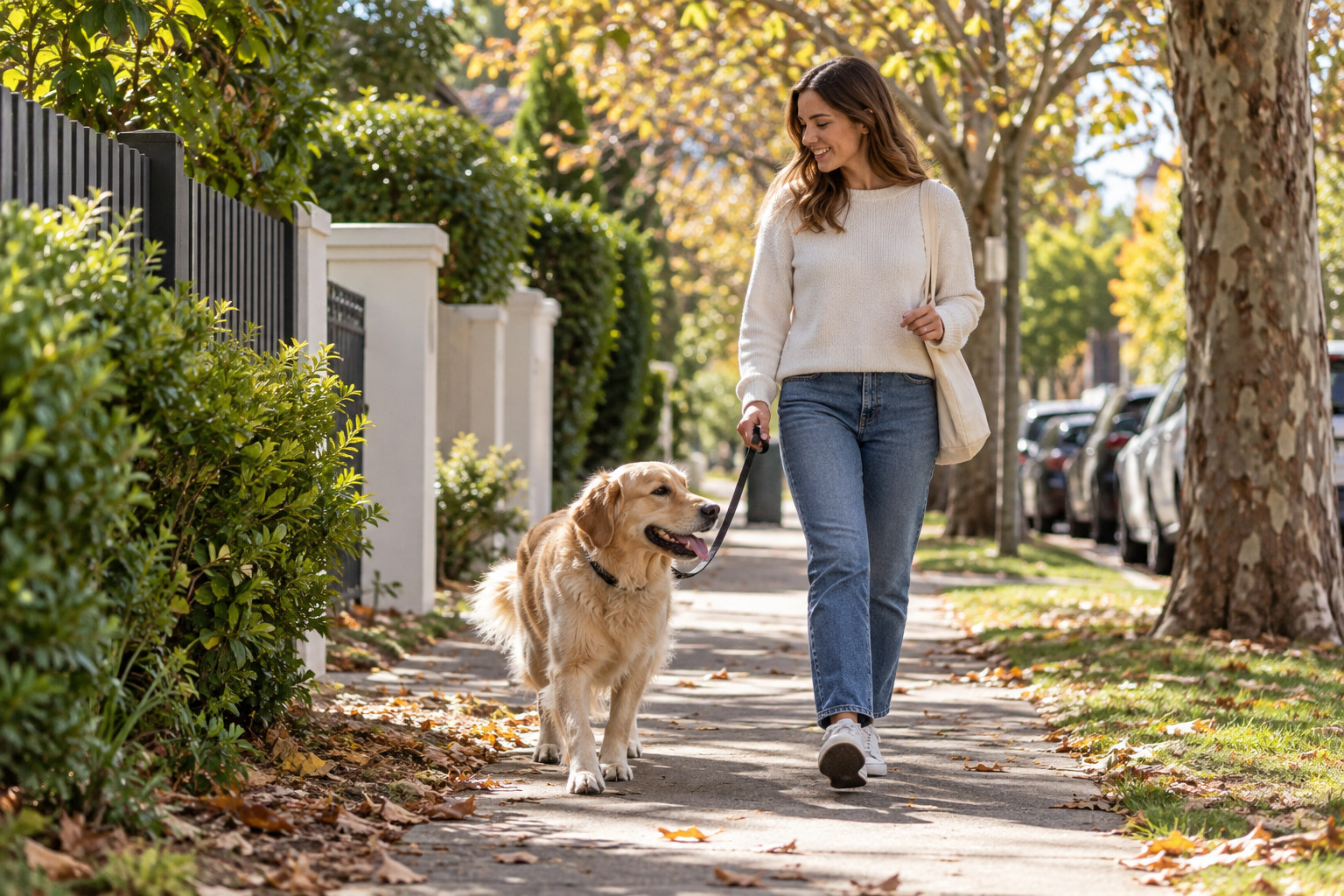
The three-monthly interval is the same in Ivanhoe as anywhere else. What changes is the tapeworm advice you find online, which is often written for farm dogs.
The Victorian Department of Health says dogs should be treated with an anti-tapeworm medicine such as praziquantel every six weeks, in rotation with a broad-spectrum wormer. That advice is aimed at dogs that get at offal. The same page says a dog is infected by eating the offal of infected livestock or wild animals, particularly the liver and lung. It also says hydatid disease is mainly associated with sheep farming. Better Health Channel gives the household rule: do not feed raw or cooked offal to your dog, including offal bought from a supermarket or butcher.
A dog walked along the Darebin Creek and Yarra trails is not in that picture. Unless it is fed offal, or travels to farmland and gets among carcasses, it stays on the ordinary three-monthly cycle.
What the trails do bring is eggs. One approved label says roundworm and whipworm eggs are very resistant and may survive in soil for years. Daily pick-up reduces that contamination. On a busy trail, picking up after your dog protects the next dog as much as your own. The other half of keeping a dog well is daily routine, and mealtimes for long-eared breeds show how much the bowl matters.
Frequently asked questions
How often should you worm a puppy?
From two weeks old, a puppy is wormed every fortnight until it is twelve weeks old. It then moves to a monthly dose until it is six months old. The exact weeks in between vary between products, so the pack’s own label settles it.
Does an all-wormer protect my dog from heartworm?
Usually not. Most all-wormer labels state that they do not control heartworm, because heartworm is carried by mosquitoes rather than picked up off the ground. A few all-wormers do prevent it, so the claims on the pack are what settle it.
Can I give a wormer and a flea treatment on the same day?
The labels on these wormers say they can be combined with flea, tick and heartworm products. Check what each pack already covers first, so you are not paying twice for the same cover.
My dog spits tablets out. What else can I use?
A chew is designed to be eaten from the hand like a treat, and a spot-on goes on the skin instead of in the mouth. For a puppy or a small dog, a liquid given with a syringe is easier again.
How do I know what dose to give?
Weigh the dog first, because every format is dosed by bodyweight. A growing puppy is heavier than it was at the last dose, so an old figure is not a safe guide.
Before you buy a wormer, weigh the dog
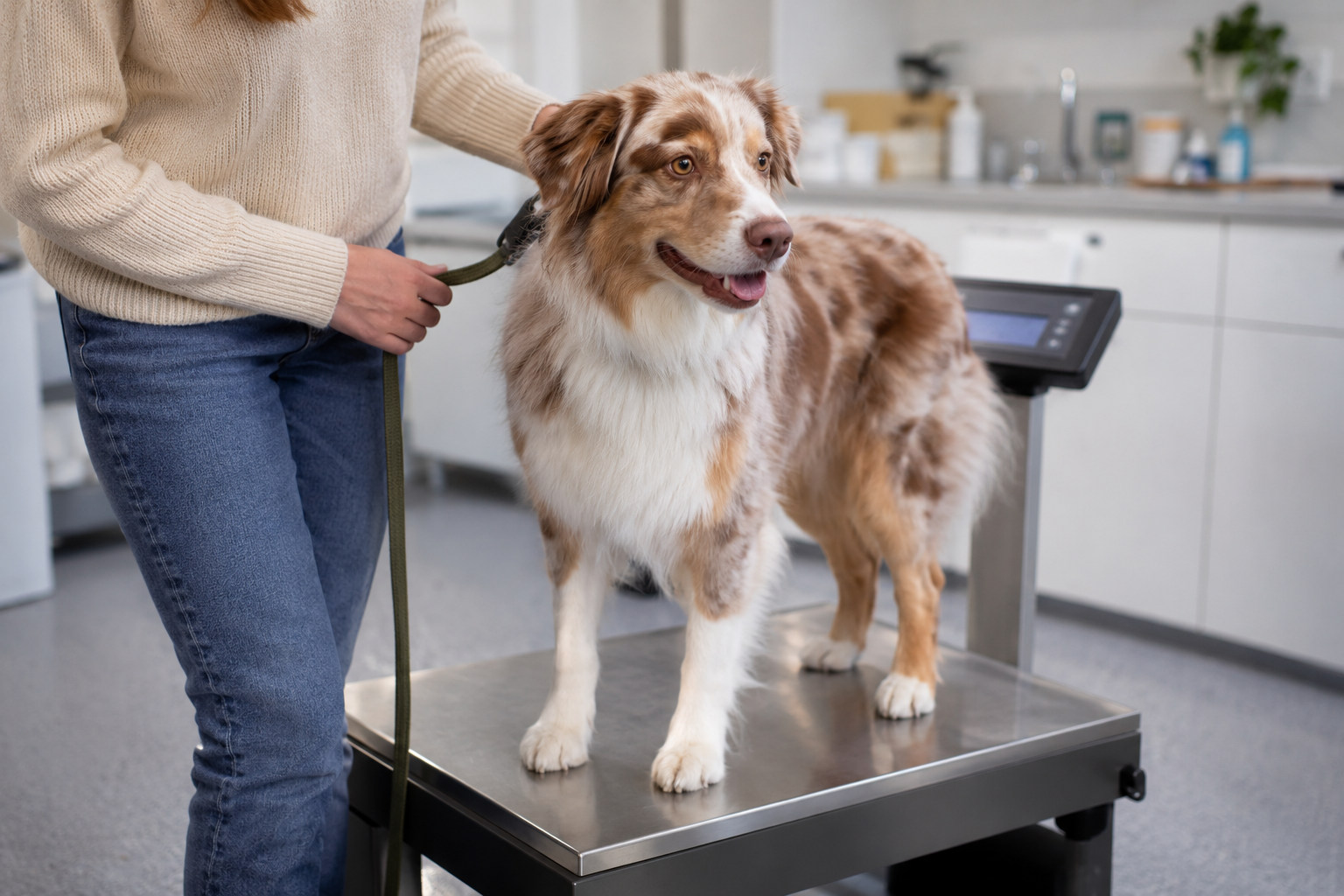
Weight is the one number that matters here, and it is the one most often guessed. Approved labels say it is essential to weigh dogs before treatment. They also warn that using a product other than as directed can leave it ineffective. One goes further, and says it can help worms develop resistance.
You do not need vet scales for this. Stand on the bathroom scales holding the dog, stand on them again without it, and take the difference. Write the number down.
Bring that number in and we will go through which format suits your dog, and how the doses fall over the next year. Belvedere’s Pet Supplies is at 93 Upper Heidelberg Road, Ivanhoe, open Monday to Saturday, 10am to 5:30pm. You can also get in touch first if you would rather ask.
Recent Comments