
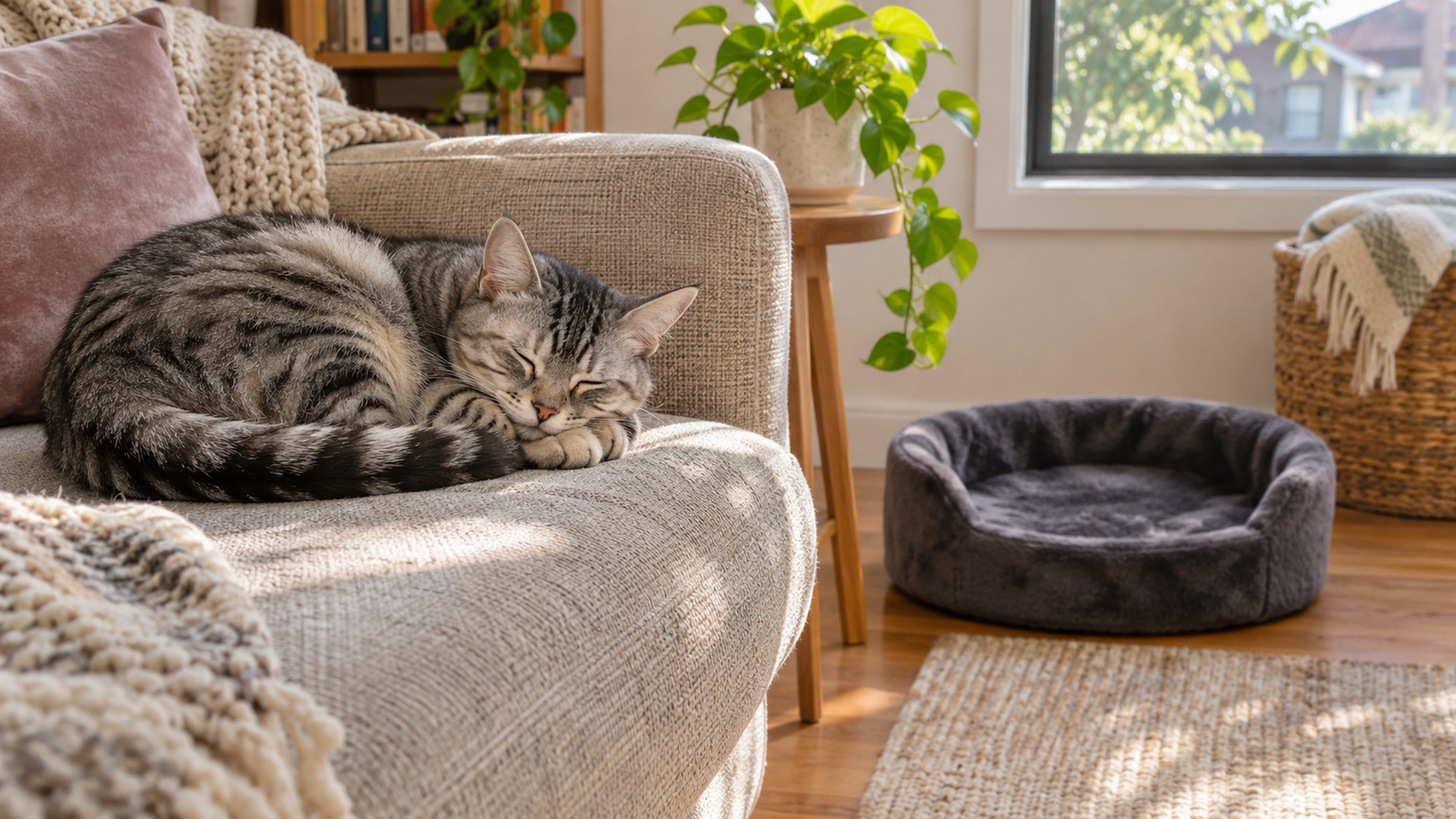
Your cat naps on the couch, the windowsill and the laundry basket, but never in the new cat bed. The bed itself may be fine. Your cat may be turning down where it sits, or how it smells. Compare the bed with the places your cat already picks: how high, quiet and warm each one is, how easy it is to leave, and whether it smells of your cat. Fix those differences before you buy a second bed.
Why won’t my cat sleep in their bed?
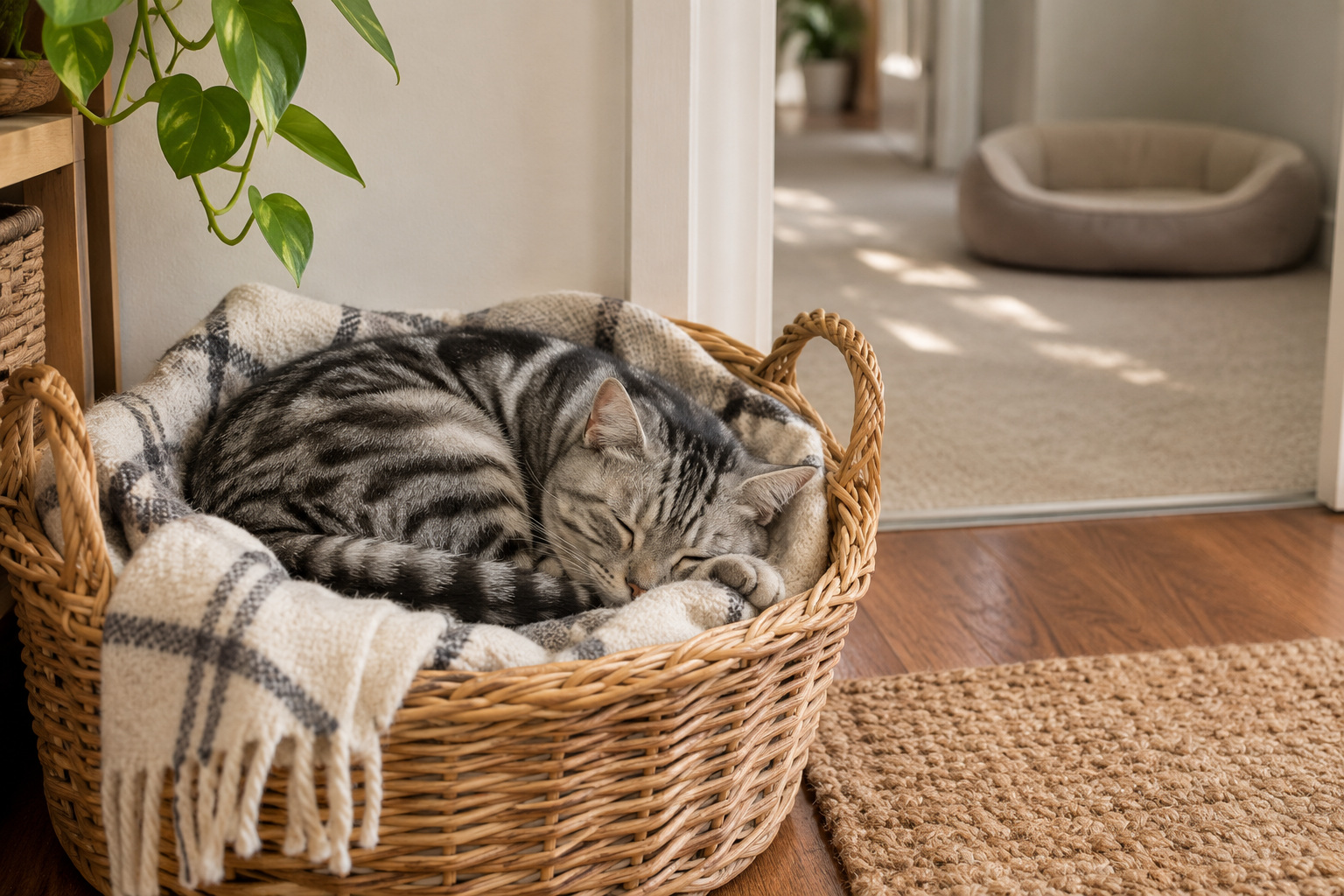
A new bed can start with two disadvantages. It smells new, and it may be in a spot picked to suit the room. Cats Protection, the UK cat welfare charity, names an unfamiliar smell as one reason a cat avoids a new bed.
Look at where your cat sleeps instead, then compare that spot with the bed.
| What to compare | Question to ask about the bed |
|---|---|
| Height | Is the favourite spot off the floor while the bed sits on it? |
| Quiet | Is the bed in a walkway, or beside a noisy appliance? |
| Warmth | Is the bed in a draught, or right next to a heater? |
| A way out | Can your cat see the room and leave quickly? |
| Smell | Does the bed smell of your cat yet? |
| Food and litter | Is the bed close to the food bowl, water or litter tray? |
An unused bed does not prove the bed is faulty, or that your cat is unwell or being difficult. Other spots simply suit your cat better for now.
A lookout and a hideaway do different jobs
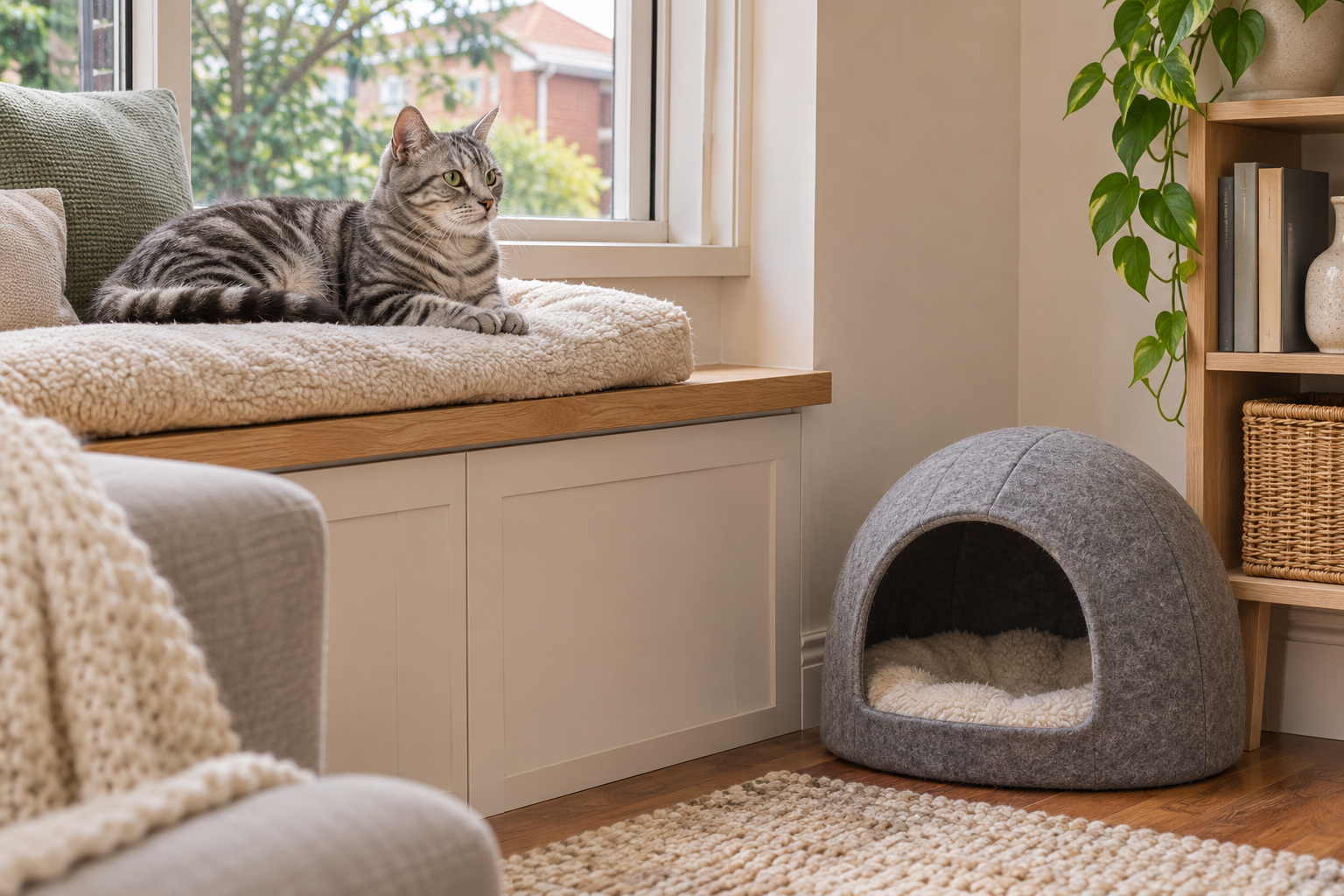
Cats rest in two different ways, and one bed in one place may not cover both.
An open cushion and a covered bed are both useful shapes. Neither is better for every cat, because the same cat may want a lookout in the afternoon and a hideaway at night.
- A lookout is an open, raised place where a cat can doze and still watch the room. Cats Protection says that when cats are resting but not fast asleep, they like a clear view of their surroundings. RSPCA Australia advises several raised areas for watching the world or having a snooze.
- A hideaway is enclosed or tucked away, so a cat can sleep without being watched or disturbed. Cats Protection says cats feel vulnerable while they sleep. That is why a covered bed, a box with tall sides or a quiet corner can appeal.
Raised spots need to be stable and easy to reach. Cats Protection says they should stay easily accessible, especially for a cat that is old or ill. A safe spot your cat already uses, such as the back of the couch or a cleared shelf, already gives them height.
Where should I put a cat bed?
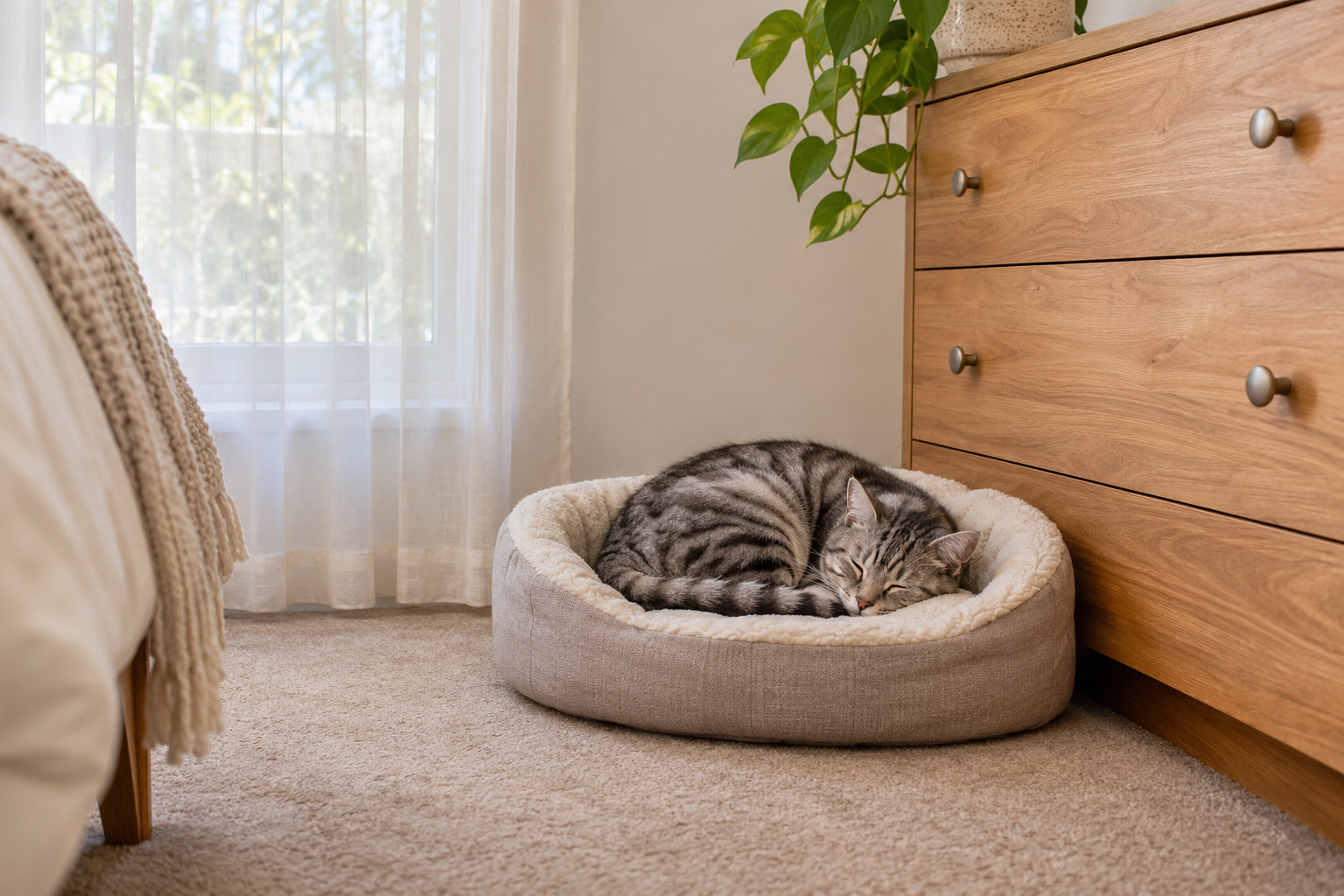
Guidance from Cats Protection and RSPCA Australia comes down to four checks:
Light and noise change through the day. In a Melbourne living room, the back of the couch can be sunny and quiet in the morning. By dinner time it may be shaded and in the family’s path. Watch where your cat goes at different times of day, then try the bed in one of those places.
- Away from foot traffic and noise. Keep the bed out of hallways and away from noisy appliances such as the washing machine. A quiet corner of a bedroom or living room is a good start.
- Away from food, water and litter. Cats prefer to rest apart from where they eat, drink and toilet, so leave clear space between the bed and those things.
- Out of draughts, but not right next to a heater. Cats Protection’s advice is a spot that is neither too cold nor too hot.
- Easy to get into and out of. Your cat should reach the bed without a struggle and be able to leave quickly if something startles them.
Getting your cat to try a new bed
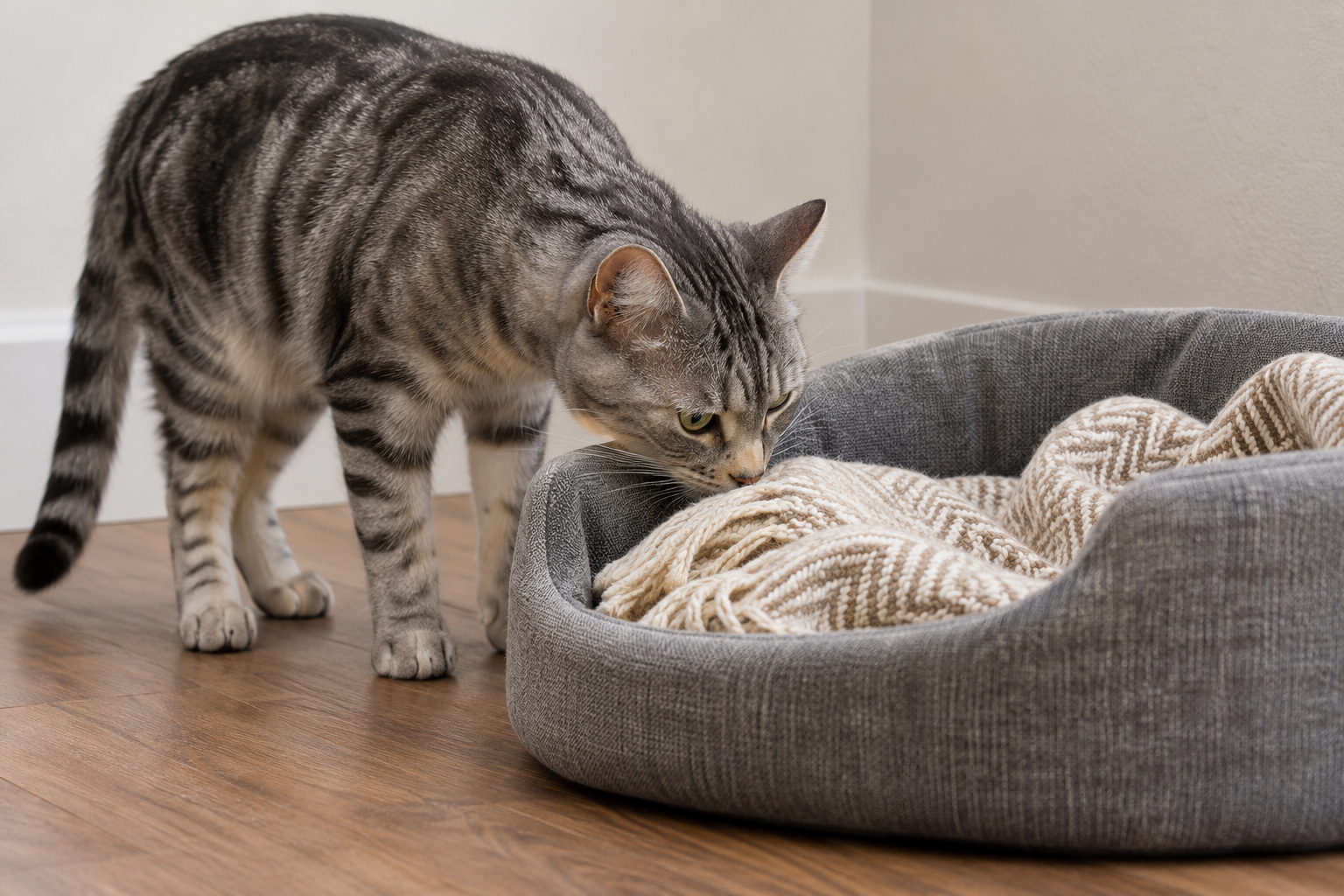
You cannot make a cat use a bed, but you can make it more inviting.
Rest and play are separate needs. If your cat seems restless rather than sleepy, our guide to cat play and toys covers that side.
- Put a blanket or soft toy your cat has already slept on inside the bed, so it smells familiar. Cats Protection suggests this for a bed that smells new.
- Move the bed to one of the places your cat already rests, or as close to it as is safe.
- Let your cat find the bed and decide. Lifting your cat in, or shutting them in, takes the choice away. RSPCA Australia says punishment should never be used with any animal, and its behaviour guidance stresses giving cats choice and control.
- Keep food and treats away from the bed. Resting and eating places work best apart.
When to ask your vet about a change

A cat that has always ignored one bed is showing a preference. A change in where or how your cat rests is different, and worth raising with your vet.
RSPCA Australia lists several ways cats can respond to pain. They include withdrawal or hiding, reduced activity, changes in posture or movement, and reluctance to jump or move. It advises looking into possible pain or medical causes when behaviour changes. Cats Protection also suggests a vet check when a cat starts hiding more than usual.
Speak to your vet if your cat:
- starts hiding more than usual
- stops jumping up to a spot they used to reach
- moves less, or rests in a posture that is unusual for them
- changes where they rest and you cannot see a reason
None of these tells you what is wrong, and a new bed will not fix them. If your cat is hiding, leave them in their hiding place rather than coaxing them out. Cats Protection says coaxing may make a stressed cat more anxious and keep them hidden for longer.
Does my cat need more than one resting place?
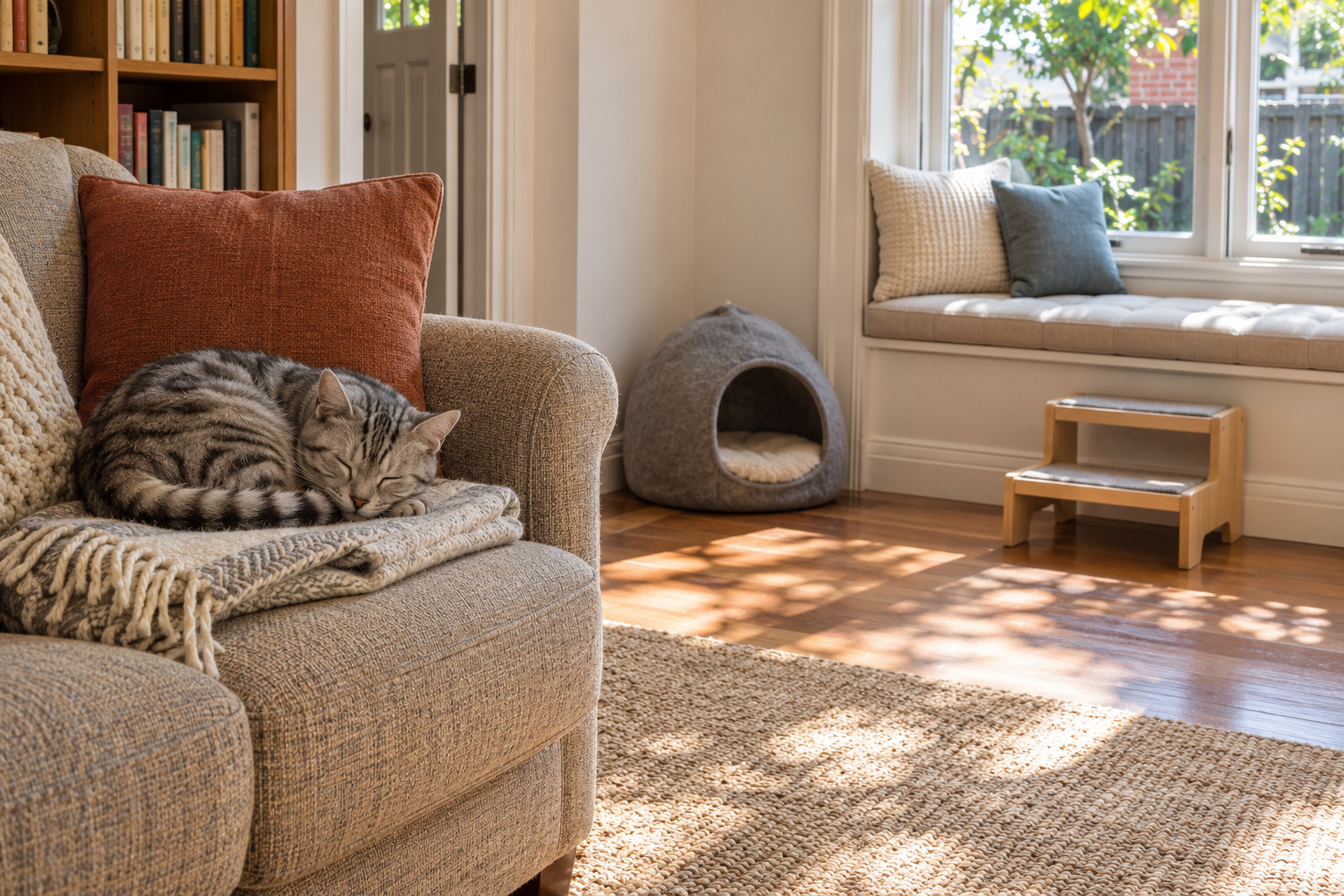
Yes, and that is normal. RSPCA Australia’s kitten care guide suggests at least three resting or hiding places in different locations for one cat. They are raised spots for watching, raised spots for hiding and resting, and comfortable beds in quiet, private areas. It says to let the kitten decide which ones it uses. Cats Protection also suggests a few beds around the house. In a home with more than one cat, give each cat its own beds, because cats that are not closely bonded usually prefer not to share.
Those places do not all have to be bought beds. A cleared shelf, a folded blanket on a chair and a covered bed can all count.
Familiar smell matters when you wash bedding too. Cats Protection suggests washing beds one at a time, so at least one keeps your cat’s scent while the others are clean. Follow the care label on each bed.
A spare dog bed can be part of the mix if its size, sides and entry height suit your cat. The measuring tips in our dog bed choices guide are written for dogs, so check them against your cat first.
Start with the spot your cat picked this week. If it is high and open, put a soft blanket there. If it is tucked away, try a covered bed in that same corner. When you are ready to compare shapes, browse Belvedere’s cat bedding options online.
Frequently asked questions
Should I move a cat bed my cat ignores?
Yes. A bed ignored in a hallway may be used once it sits in a quiet bedroom corner, so try it near wherever your cat naps now.
Is an open or covered cat bed better?
It depends on the job you want it to do. Open suits a cat that likes to watch the room, covered suits a cat that wants to be out of sight, and having both gives your cat the choice.
Can two cats share one bed?
Cats with a very close bond sometimes will. Otherwise plan on separate beds for each cat, in different spots around the home.
What resting places does a kitten need?
A mix: somewhere raised to watch from, somewhere raised to hide, and a soft bed in a quiet spot. Spread them around the home and let your kitten choose.
Recent Comments