
Tug Toys That End Fewer Games Badly
Practical guidance for choosing tug toys that keep play cleaner, calmer, and easier to finish.
Tug is enjoyable until the toy feels too short, the dog is suddenly too close to your hands, and ending the game becomes harder than it should be. When that happens, the problem is often not tug itself. It is usually the setup. A cramped toy, a weak join, or a game that speeds up faster than the dog can stay organised can turn a good few minutes of play into something messy.
That is why tug toys are worth choosing with a bit more thought than “strong rope equals good tug.” Handle length, grip points, fabric strength, and the way the toy is put together all change how the game feels. They also change how easy it is to keep the focus on the toy instead of your sleeves, fingers, or body position.
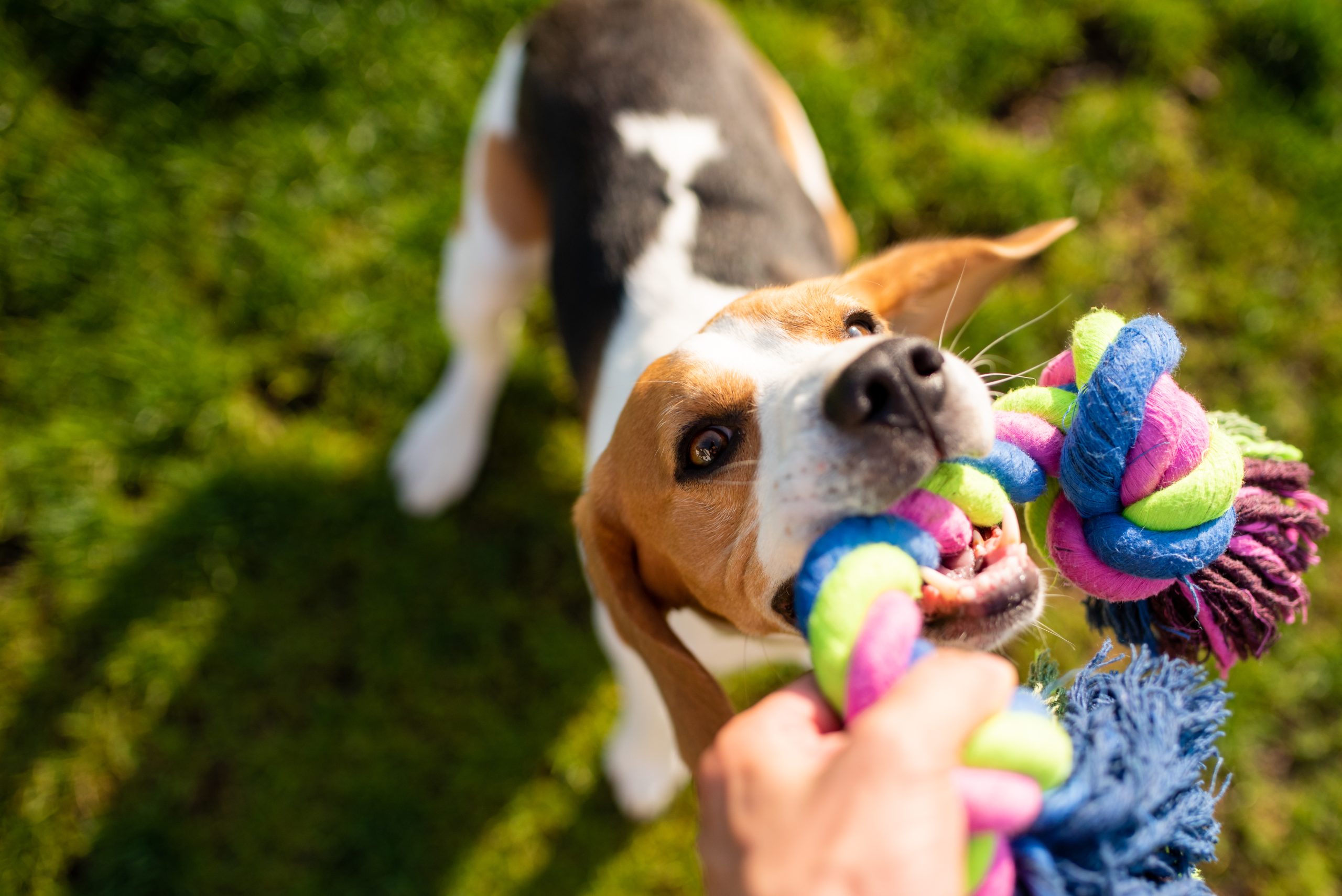
What makes a tug game feel cleaner?
A tug game usually goes better when the toy gives both of you enough room, enough structure, and enough control to stay on the same page.
That does not mean the game has to feel stiff. The point is not to drain all the fun out of it. The point is to make tug readable. A toy with some length, a clear place for the dog to grab, and joins that hold up under repeated pulling is often easier to use well than a short, crowded toy that keeps bringing the dog too close to your hands.
In practice, cleaner tug often comes down to:
- enough space between your hand and the dog’s mouth
- a grip area that is obvious for both of you
- material and stitching that suit how hard your dog commits
- a game rhythm that can pause and restart without fuss
Why some tug games stay clean and others get messy
Tug does not usually go wrong because tug is a bad game. It usually goes wrong because the setup makes the game too crowded, too intense, or too hard to pause.
A longer rope or tug toy gives the interaction more room. A clear handle or end section makes it easier for you to present the toy consistently. A toy with a weak stitched join can start to twist, stretch, or feel awkward long before it fully breaks. All of that changes the mood of the game.
Toy design matters more than many people expect. So does the pace of the session. A dog can be excited and still stay organised. Problems often start when the pace ramps up so quickly that the dog stops taking the toy cleanly and starts launching at the nearest moving thing.
Handle length changes the whole interaction
A tug toy that is too short can make the whole game feel crowded.
The shorter the toy, the less room there is between your hand and the dog’s mouth. For a calm dog with a neat grip, that may not matter much. For a fast, committed dog, it can change everything. The dog comes in harder, the human braces more, and suddenly the toy is not the clear centre of the game anymore.
A bit more length often helps because it changes body position on both sides. The dog has more room to approach and re-grip. You have more room to hold steady, guide the toy, and avoid that feeling that the whole game is happening right on top of your wrist.
Handle length also affects how easy it is to keep the toy as the focus. When there is proper space, the dog is more likely to target the tug itself rather than hands, clothing, or whatever part of you happens to be nearest.
A few general patterns show up often:
- Very short tug toys can feel cramped and reactive.
- Mid-length toys often give enough room for a cleaner back-and-forth.
- Longer tugs or rope toys can suit bigger dogs or dogs that come in with more speed.
Length alone is not magic, but it often makes the game easier to read.
Fabric strength matters, but joins matter just as much
It is easy to focus on the headline material. Rope sounds tough. Webbing sounds strong. Fleece sounds softer. But the weak point is often the join, not the rope itself.
A rope toy can be sturdy through the main body and still fail where the handle is stitched on. A fleece tug can feel pleasant in the hand and still stretch awkwardly if the construction is poor. A mixed-material tug may give you useful grip and texture, but if the connection points twist or separate, the game gets sloppier long before the toy is fully worn out.
Different materials also create a different feel during play:
- Rope tugs often feel firmer and more direct.
- Fleece tugs usually feel softer and can suit dogs that grip hard but do better with a gentler mouth feel.
- Webbing and mixed-material tugs can offer structure and defined handles, though their joins need to be solid.
Strength matters, but clean construction matters just as much. A tug toy that stays straight, holds its shape, and keeps its grip points obvious is usually easier to use than one that twists into a knot halfway through the session.
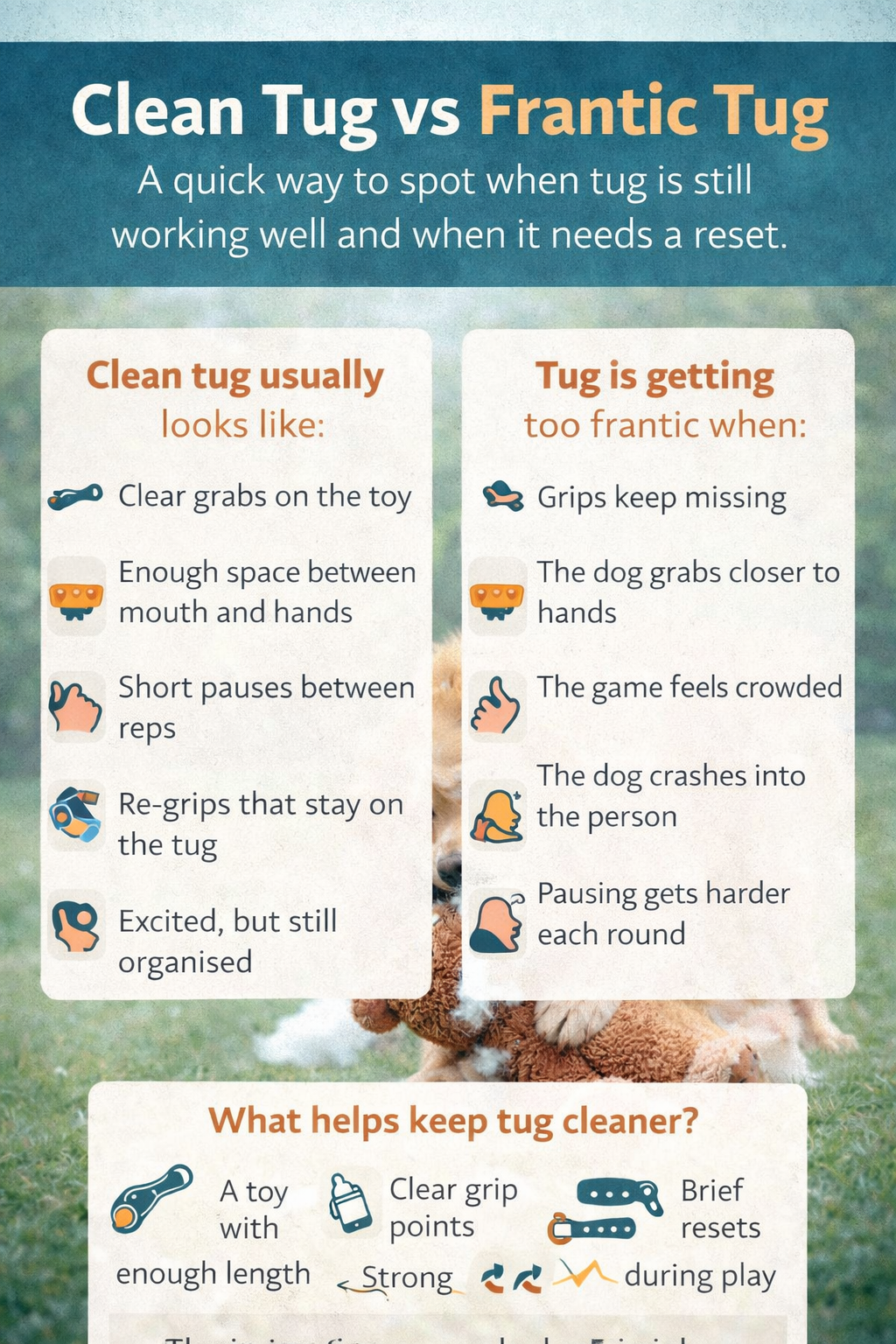
What “too frantic” actually looks like
Excited is fine. Frantic usually looks less organised.
A dog can pull hard, re-engage quickly, and still be playing neatly. The shift happens when the dog starts missing the toy, coming in sideways, crowding the person, or struggling to reset between reps. It is less about raw energy and more about clarity.
Common signs that the game is getting too messy include:
- repeated missed grips
- grabbing closer to your hands
- leaping into your body instead of re-taking the toy cleanly
- shaking wildly without settling back onto the tug
- ignoring the shape of the toy and just lunging at movement
- finding it hard to pause even for a second
That does not mean the session has failed or that the dog is doing something extreme. It usually means the pace has got ahead of the dog’s ability to stay organised. Often the simplest fix is to slow the rhythm, present the toy more clearly, and make the next rep look tidy instead of frantic.
How to keep tug from turning into a wrestling match
The toy itself can help a lot here. Enough length, a clear grip area, and a shape that keeps the action on the object rather than on the person all make a difference.
Rhythm matters too. Tug usually stays cleaner when it has a pattern rather than one long all-out pull. Short reps with brief resets often work better than dragging the game into a constant struggle. That gives the dog repeated chances to take the toy cleanly instead of just hanging on while the game gets more crowded.
Practical ways to keep the game readable:
- use a tug that gives your hands some breathing room
- present the toy clearly rather than waving it too close to your body
- let there be short pauses between reps
- reset before the dog gets so revved up that the toy shape stops mattering
- finish while the game still feels orderly
None of that turns tug into a lesson. It just keeps the toy at the centre of the interaction.
How to stop the game cleanly
Stopping the game does not need to become a strength contest.
The cleanest finish is usually the one that does not feel dramatic. If the last rep looks wildly different from the rest of the game, dogs often stay revved up because the whole ending feels abrupt or confusing. It is usually easier to slow the pace first, make the final rep look ordinary, then stop clearly.
That often means:
- easing the intensity down before the finish
- avoiding a drawn-out battle over the last hold
- not yanking the toy away in a way that restarts the excitement
- using the same clear presentation you used during the game
- ending, then putting the toy away or switching activities
A clear finish often matters more than who “wins.” The aim is not to overpower the dog. It is to make stopping feel normal enough that the game can end without spilling into grabbing, jumping, or wrestling.
What to look for in a tug toy
If you want tug to stay enjoyable and manageable, look for a toy that matches the dog you actually have, not an imaginary calm version of them.
A good tug toy often has:
- enough length for your dog’s size and speed
- grip points that are easy to see and hold
- material that suits the dog’s bite style and intensity
- strong joins and stitching
- a shape that keeps the game about the toy, not your hands
For some dogs that means a rope dog toy with a bit more reach. For others it means a softer tug with a comfortable handle and cleaner presentation. The best choice is usually the one that helps the game stay organised.
When tug toys make the most sense
Tug toys tend to work well for dogs that enjoy interaction more than solo chewing, and for owners who want a style of play that feels active without becoming a wild chase around the yard.
They also make sense for:
- short bursts of play during the day
- dogs that engage well when the game has structure
- households that want a toy that is interactive but easier to control than constant fetch
- dogs that like gripping and re-engaging with a person rather than just carrying a toy off
Used well, tug toys can sit comfortably alongside other dog toys rather than replace them. They just fill a different job.
A calmer way to think about tug
The point is not to make tug rule-heavy or joyless. It is to choose a toy and a style of play that give the game enough room to stay enjoyable, readable, and easy to end.
When tug goes badly, it is often because the toy is too short, the join is poor, the pace gets too high, or the finish turns into a contest. Those are practical problems, not dramatic ones. A better tug toy will not fix everything, but it can make a very ordinary difference in how clean the game feels.
Clean Tug vs Frantic Tug
FAQs
Are rope tug toys good for dogs?
They can be, especially for dogs that like a firmer tug and for owners who want a toy with clear structure. The main thing to check is not just the rope itself, but how the joins and handles are put together.
How long should a tug toy be?
Long enough to give your hands and the dog’s mouth some space. Bigger or faster dogs often do better with more length because the game feels less cramped.
Why does tug get too rough with my dog?
Usually because the pace rises faster than the dog can stay organised, or because the toy makes the interaction feel crowded. Rough tug is often more about setup and rhythm than about the game itself.
How do I end a tug game without a fight?
Slow the pace before you finish, make the final rep look ordinary, then end clearly without dragging out the last hold into a battle.
What material is best for a dog tug toy?
There is no single best material for every dog. Rope, fleece, and mixed-material tugs each create a different feel. Construction and join strength matter as much as the headline material.
Is a shorter tug toy harder to use?
It often is, especially with a fast or committed dog. Short toys can make the game feel more crowded and bring the dog too close to your hands.
What are signs my dog is getting too worked up during tug?
Missed grips, grabbing near hands, crashing into you, and struggling to pause between reps are all common signs that the game is getting less organised.