
Dog Toys for Dogs That Shred Plush
Practical buying advice for owners whose soft toys fail fast
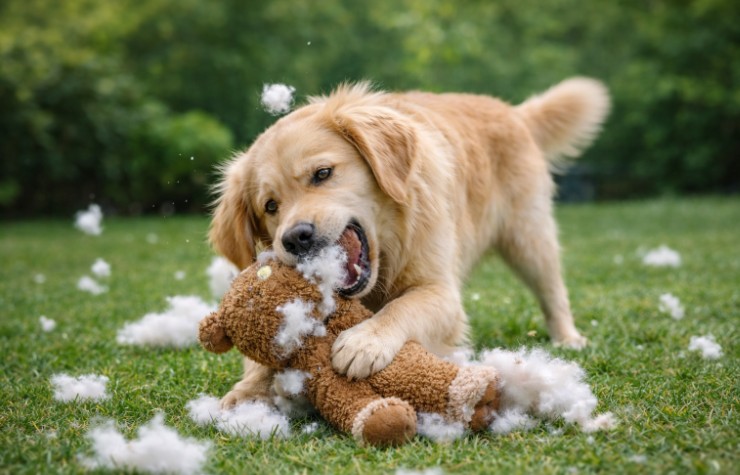
Some dogs do not slowly wear a plush toy down. They find the weak point, open it up, and turn it into stuffing on the floor in minutes. If that sounds familiar, the useful question is not “Which plush toy is strongest?” It is “How does my dog usually break them, and what tends to fail first?”
That shift matters. Plush toys usually do not fail because they are bad in a general sense. They fail in very specific ways. One dog works at seams. Another tears off ears or legs. Another bites through the centre, then shakes until the whole toy opens. Once you start looking at failure patterns instead of labels, choosing better gets easier.
So what actually helps?
There is no plush toy that holds up equally well for every dog, and no soft toy that deserves to be called indestructible. What does make a difference is construction.
Toys with simpler shapes, fewer stitched-on parts, stronger seam placement, less stuffing, rope through the centre, or denser rubber sections often last longer or at least fail in a less chaotic way. That does not mean they survive forever. It means they can buy you more useful play before the toy turns into loose stuffing, exposed squeakers, or small torn-off pieces.
| Feature | What it changes | What to watch for |
| Fewer seams and appendages | Fewer obvious weak points | Better for dogs that strip ears, tails, or limbs first |
| Heavy stuffing | Softer feel and satisfying bite | Can become a bigger mess once punctured |
| Rope core | Adds structure after the outer layer starts failing | Still needs replacing once rope frays badly |
| Dense rubber sections | Can resist punctures better in mixed-material toys | Too firm is not always better for every play style |
| Simpler shape | Less to grab and rip off | Often a better fit for dogs that dismantle toys piece by piece |
If you want a shorter version, look for toys that:
- keep the seam stress low
- avoid loose extra parts
- match the way your dog usually destroys soft toys
- fail more gradually rather than all at once
Why plush toys fail differently
Not all plush-destroying dogs do the same thing. That is why one toy lasts three weeks for one household and three minutes in another.
Some dogs go straight for a protruding part. If the toy has floppy ears, thin tails, stitched limbs, or raised details, those become the first target. Other dogs clamp onto the soft middle and puncture the body. Some work on corners and seams because those areas give them a place to get purchase. Others do not pierce much at all. They shake, tug, and stress the joins until stitching starts to open.
That difference matters because the construction that helps one dog may not help another. A rope-core plush can make sense for a dog that splits the centre open. A simpler, limbless shape may make more sense for a dog that strips bits off the outside first. Watching how your dog dismantles toys is often more useful than shopping by packaging claims alone.
- Seam splitters go after edges, corners, and joins.
- Limb strippers remove ears, tails, legs, and raised details first.
- Centre puncturers bite through the main body and pull stuffing out.
- Shake-and-rip dogs create damage through force rather than steady chewing.
Seams are often the first weak point
The seam usually tells you more than the label.
Fabric can feel thick in the hand and still fail fast if the stitching is carrying too much strain. Plush toys tend to split at edges, corners, limb joins, and anywhere two panels meet under tension. The more complicated the shape, the more potential weak points you get.
Toys with ears, legs, wings, tails, or loose decorative pieces often give a shredding dog an easy starting point. Once that first tear begins, it can travel along the seam much faster than people expect. A toy may look sturdy overall, but the join of a limb can still be the whole story.
This is one reason simpler plush shapes often hold up better. A rounded or compact toy with fewer stitched-on extras gives the dog less to isolate and rip. That does not make it tough in an absolute sense. It just removes some of the obvious first-fail areas.
- how many separate parts are stitched on
- whether the toy has narrow corners or thin limbs
- where the main seam lines sit
- whether the shape gives the dog an easy tear point
Stuffing changes the life of the toy
Stuffing changes both the appeal of a plush toy and the way it falls apart.
A heavily stuffed toy often feels satisfying to bite, grab, and shake. It has body. It compresses in a way many dogs seem to enjoy. That is part of why soft toys still have value even in homes where durability is a problem. For some dogs, the softness is the point.
The trade-off is what happens after the first puncture. Once the outer layer is open, stuffing tends to turn a small split into a much bigger mess. A minor hole becomes something worth pulling at. Then the toy loses shape quickly, squeaker pockets become exposed, and the whole thing can unravel faster than the original tear suggested.
Less-stuffed plush toys can sometimes fail in a tidier way. There is less bulk forcing against the fabric from the inside, and less material ready to spill out once the outer shell opens. They may feel less plush, but for some dogs they stay manageable for longer.
- how soft the toy feels in the mouth
- how satisfying it is to grab and shake
- how fast a small opening becomes a full blowout
- how messy the failure is once the outer layer is breached
Rope cores can change the toy, not save it
A rope core does not make a plush toy invincible, but it can change what remains once the outer layer starts to wear through.
In practical terms, rope gives the toy structure. If the plush fabric tears, the toy may still hold together long enough to remain usable for a while. That can be especially helpful for dogs that split the outside but still like carrying, tugging, or chewing what is left.
It also changes how the toy feels during play. Rope-core toys often have a firmer centre and clearer shape. Some dogs prefer that because the toy is easier to grip and less floppy. Others are less interested in it because the plush feel is interrupted by the internal structure.
The limit is obvious once the rope itself begins to fray badly or long strands start coming free. At that point, the toy is not still going in a useful way. It is breaking down into parts.
Rope inside a plush toy often extends the useful life for certain dogs, but it is better to think of it as changing the failure pattern rather than preventing failure.
Rubber density and mixed-material toys
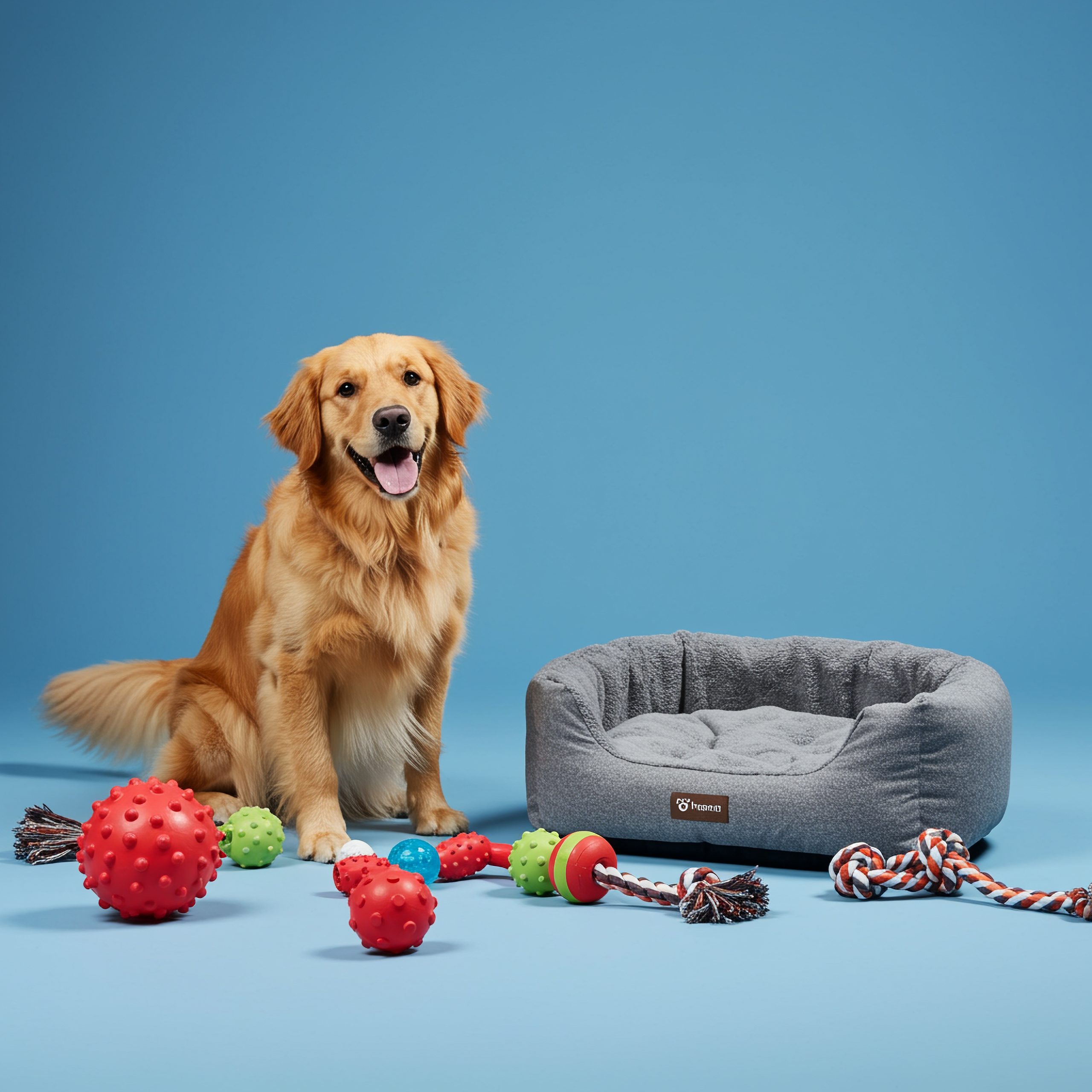
Mixed-material dog toys can be a better fit for some plush shredders, especially when plush is paired with rubber chew points or denser end sections.
Rubber density matters because it changes both feel and resistance. A denser rubber section may stand up better to repeated puncturing than soft plush alone. It can also redirect where the dog bites, which sometimes protects the plush sections a bit longer.
But denser is not automatically better. A very firm section may resist damage well, yet do little for a dog that mainly enjoys soft, grab-and-shake play. On the other hand, a softer rubber element may suit the dog better but wear faster. The useful question is how your dog interacts with the toy. Do they work the corners? Clamp the ends? Bite the middle repeatedly? Shake the whole thing? The right mixed-material toy depends on that pattern.
Where these toys often help is in giving the dog more than one texture and more than one way to engage. A plush body with rubber details or reinforced bite points can slow down the all-plush failure pattern without turning the toy into something hard and joyless.
What usually fails first
If you are trying to buy better, these are the areas worth checking first:
- ears, tails, legs, and other stitched-on extras
- seam lines at corners or edges
- soft centres in heavily stuffed toys
- squeaker pockets once a tear opens nearby
- outer plush over a rope-core structure
- rubber joins where one material meets another
What to retire early
Retiring a toy early is sometimes the better value decision. Once a toy starts breaking down into loose internal parts or small detached sections, it stops being worth stretching out.
It is usually time to remove a plush toy from rotation when you can see:
- stuffing coming out
- a loose or exposed squeaker
- fraying rope strands that keep lengthening
- split rubber sections in a mixed-material toy
- detached limbs or small broken-off pieces
- a seam opening that is widening each session
Slow wear is one thing. A toy coming apart into bits is another. Some dogs can keep playing with an older toy for a while if it is only flattened or scruffy. The line changes when internal material is exposed or pieces start separating.
How to choose better after wasting money before
A more useful way to choose is to match the toy to the way your dog destroys it.
If your dog strips ears, tails, and legs first, simpler plush shapes with fewer extras usually make more sense. If your dog splits the middle open and digs into the stuffing, less-stuffed toys or rope-core designs can be worth a look. If your dog punctures and shakes, mixed-material toys with denser chew points may hold up better than soft plush alone. If your dog enjoys softness but destroys plush at the first weak point, construction details matter more than branding.
A practical way to think about it is:
- Dog targets limbs first: choose simpler shapes
- Dog opens the centre: look at less stuffing or rope-core designs
- Dog bites and shakes hard: consider fewer loose features and denser materials
- Dog likes softness but tears seams: look closely at seam layout before anything else
That does not mean soft toys are pointless. Some dogs still get good value from plush dog toys even if they do not last forever. The goal is not a magic toy. It is a toy that fits the way your dog goes after it, fails more gradually, and is easier to retire before it becomes more trouble than it is worth.
FAQs
Why does my dog rip plush toys open so fast?
Usually because your dog has found the weak point they naturally go for, such as a seam, a limb, or a soft centre. Dogs do not all destroy plush the same way, so the first failure point can vary a lot.
Are rope-core dog toys better than stuffed toys?
For some dogs, yes. Rope-core toys can hold their shape longer after the outer plush starts tearing. They are not always longer-lasting in every case, but they often fail differently.
What makes a plush dog toy last longer?
Simpler shapes, fewer stitched-on parts, better seam placement, less stuffing, and reinforced or mixed-material construction can all help. No single feature guarantees a long life.
Should I throw a dog toy out when the stuffing comes out?
In most cases, yes. Once stuffing is exposed, the toy tends to deteriorate quickly and becomes harder to manage safely and cleanly.
Are toys with fewer seams better for dogs that shred plush?
Often, yes. Fewer seams and fewer appendages usually mean fewer obvious weak points for the dog to start tearing.
Is a rubber-and-plush toy better than a normal plush toy?
It can be, especially for dogs that puncture soft toys quickly. The rubber may slow down wear in the areas your dog targets most, though it still depends on how your dog plays.
Can any plush dog toy be indestructible?
No. Some plush toys last longer than others, and some fail in a cleaner or slower way, but no plush toy suits every dog indefinitely.