
Dog ID tags in Victoria: what the law requires and why a QR tag is worth adding
Your dog slips out the front door while you’re bringing in the shopping. A neighbour two streets away has them by the collar, trying to work out who they belong to. What happens next depends on what’s hanging from that collar – and for most Victorian dogs, the answer is a council registration tag with a number that means nothing to a member of the public.
If you’ve ever wondered what dog ID tags your pet actually needs in Victoria – legally and practically – this guide breaks it down. We’ll also cover a simple upgrade that makes your dog far easier to get home: a QR pet tag.
What Victorian law says about dog identification
Under the Domestic Animals Act 1994, Victorian dogs need three layers of identification.
Microchipping. Every dog must be implanted with a microchip before they can be registered. The chip creates a permanent link between your dog and your contact details on a national database.
Council registration. All dogs over three months old must be registered with the council where they’re kept. In Ivanhoe and surrounding suburbs, that’s Banyule City Council. Registration must be renewed by 10 April each year. Failing to register can attract a fine of up to 20 penalty units – over $4,000 at current rates.
The council registration tag. This is the part many owners overlook. Under Section 20 of the Act, your dog must wear their council-issued registration tag whenever they’re outside your property. Not just at the dog park or on a lead walk – any time they leave your premises. If your dog is found without their tag, you can be fined up to 2 penalty units (around $407 as of the 2025–26 financial year).
An unidentifiable dog picked up by council rangers may be impounded, and reclaiming an impounded animal involves additional fees and stress – for you and for your dog.
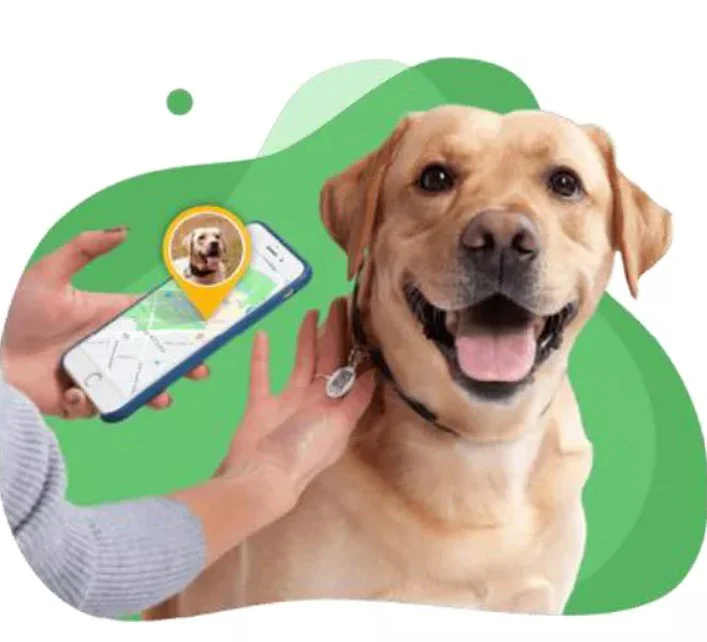
Why a microchip alone isn’t enough
Microchips are the legal backbone of your dog’s identification. But they have one significant limitation: they can only be read with a specialised scanner. Vets, shelters and council officers carry them. Your neighbour does not.
If your dog escapes and is found by a jogger, a parent at the school pickup, or someone walking their own dog, none of those people can scan the chip. They need something visible.
The council registration tag gives them a number, but that number only connects to your details through the council’s database. If your dog bolts at 8pm on a Saturday, the finder is left with a registration number and no way to reach you until council opens on Monday morning.
That gap – between “found the dog” and “contacted the owner” – is where dogs end up posted on lost pet Facebook groups, handed to shelters, or wandering further from home.
Traditional engraved tags vs QR smart tags
An engraved pet identification tag is the classic solution. A metal disc with your dog’s name and your phone number stamped into it. It works, and it’s simple. But it has limits.
- Space is tight. Most engraved tags fit a name and one phone number, maybe two if the tag is large.
- Details go stale. Change your phone number or move house, and you need a new tag.
- Text wears down. After a year or two of daily wear, the engraving can become hard to read.
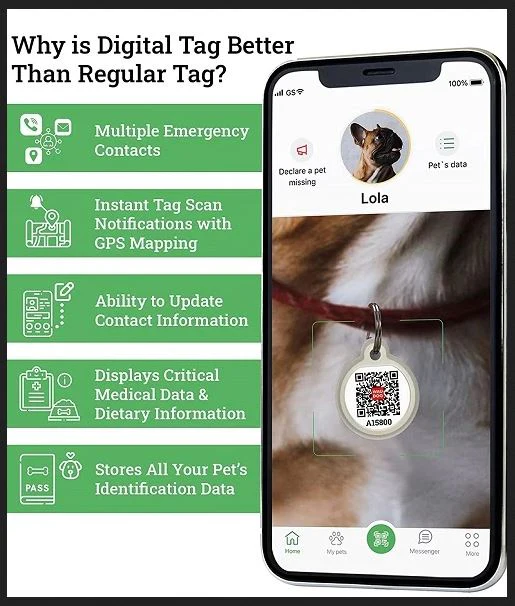
A QR smart dog tag works differently. Instead of engraved text, the tag carries a QR code. When someone finds your dog, they scan the code with any smartphone camera – no special app needed on the finder’s end. The scan opens your pet’s profile, which can include multiple contact phone numbers, your home address, medical or dietary needs, vet details and vaccination status.
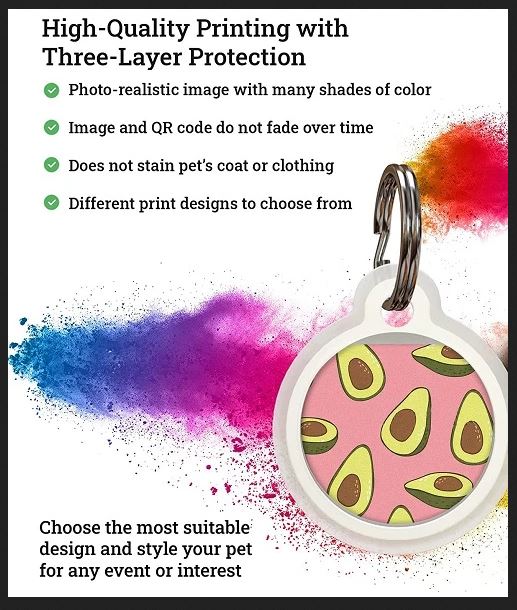
The Wau Dog Smart ID QR Pet Tag that Belvedere’s stocks is made from polymer-coated stainless steel with three-layer print protection, so the QR code holds up to daily wear. A silicone frame around the tag stops it clinking against the collar hardware – something any owner who’s listened to jingling tags at 6am will appreciate.
The other advantage is the notification. When someone scans the code, you receive an instant alert on your phone with the geo-location of where the scan happened. You don’t need to wait for a phone call. You know immediately that your dog has been found, and roughly where they are. This is not GPS tracking – the tag is passive, and you only get a location when someone actively scans it – but it’s a significant step up from an engraved tag and a crossed-fingers approach.
Setup is done through a free app with no ongoing subscription. The tag itself is currently $6 at Belvedere’s.
What to put on your dog’s QR profile
Once you’ve set up the Wau Dog app, build your dog’s profile with these details:
- Your dog’s name, breed and a clear, recent photo
- At least two contact phone numbers – yours plus a partner, family member or trusted friend
- Your home address (helpful if the finder is close enough to walk the dog back)
- Any medical conditions, allergies or dietary needs
- Your vet’s name, clinic and phone number
- Current vaccination status
The app also stores digitised copies of documents – vaccination certificates, registration paperwork, insurance details – and lets you set reminders for vet appointments or grooming bookings. If you have more than one pet, you can manage multiple profiles from the same account.
Do QR tags replace the council tag?
No. A QR tag is an addition to your dog’s collar, not a replacement for the council registration tag. The council tag is a legal requirement under the Domestic Animals Act 1994. Without it, your dog is non-compliant whenever they leave your property, and you can be fined.
The practical setup is straightforward: your dog wears their council tag and a QR tag on the same collar. The council tag keeps you on the right side of the law. The QR tag gives anyone who finds your dog the fastest possible way to contact you and get them home.
Together, you have legal compliance covered and a real-world backup for the scenario every dog owner dreads: the moment your dog is somewhere they shouldn’t be, and a stranger is trying to help.
The Wau Dog Smart ID QR Pet Tag is available at Belvedere’s Pet Supplies in Ivanhoe and through the online store, currently on sale for $6. It comes in a range of designs, and setting up the QR profile takes about five minutes through the free app. Order the Wau Dog Smart ID tag online here or drop into the shop at 93 Upper Heidelberg Road if you’d like to see the designs in person.
Frequently asked questions
Do QR pet tags work with all smartphones?
Yes. Any smartphone with a camera can scan a QR code. The finder doesn’t need to download an app or have any special equipment – they just point their camera at the tag.
What happens if the QR code gets scratched or damaged?
The Wau Dog tag uses polymer-coated stainless steel with three layers of print protection, so it’s built for daily wear. QR codes also have built-in error correction, meaning they can still scan even with minor surface damage. If the code does become unreadable over time, the tag will need to be replaced.
Can I use a QR tag for my cat?
Yes. The Wau Dog Smart ID tag works for any pet that wears a collar. Belvedere’s stocks them in the cat section of the online store.
Is the Wau Dog app free?
Yes. There’s no subscription or ongoing cost. You pay for the tag and use the app at no extra charge.
Is a QR tag the same as a GPS tracker?
No. A QR tag is passive. It doesn’t track your dog’s location in real time. You only receive a location notification when someone actively scans the code with their smartphone. For continuous location tracking, you’d need a separate GPS device.