
Carrying The Load: Are Dog Slings and Cat Backpacks Safe?
We have all seen it. Someone walks past with a clear plastic bubble on their back, and inside sits a cat looking out at the world like a furry astronaut. Or you see a cyclist with a small terrier swaddled against their chest in a fabric sling.
It looks convenient. It looks cute. But for many responsible pet owners, the second thought is always: Is that safe?
There is a hesitation to buy these carriers. You worry about spinal alignment. You worry about overheating. Mostly, you worry that your cat will panic, claw through the mesh, and bolt into traffic.
These are valid fears. Not all carriers are built the same, and putting a living animal into a bag requires more than just zipping it up.
But when you choose the right gear and use it correctly, a carrier is not just a fashion statement. It is a mobility tool. It allows an anxious rescue dog to feel safe in a crowd. It lets an indoor cat see the outside world without the risk of a leash.
Here is what you need to look for to do it safely.
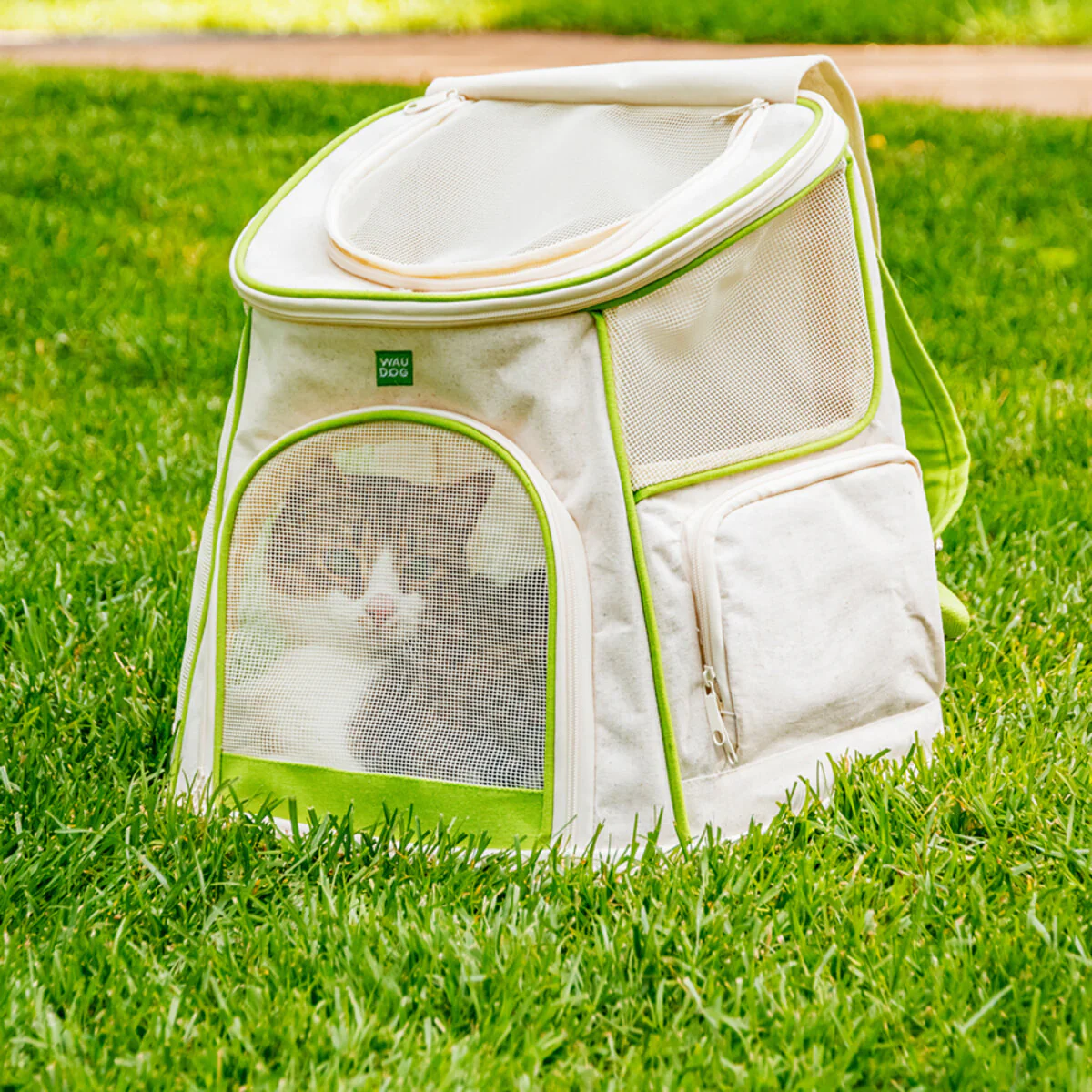
The Cat Backpack: Ventilation is Everything
The biggest criticism of cat backpacks—specifically the ones with the solid plastic “bubble” front—is airflow. A plastic shell acts like a greenhouse. In the Australian summer, even a mild 24-degree day can turn the inside of a poorly vented pack into a sauna.
If you are looking at a backpack, ignore the style and look at the mesh.
You need substantial airflow panels on the sides and the front. The Waudog Relax Eco Carrying Backpack is designed to balance the view with the air. It gives the cat a window to watch the street (which keeps them entertained) but ensures fresh air is constantly cycling through the pack.
The Escape Proof Question
Cats are liquid. If there is a gap, they will find it.
A safe backpack must have an internal tether. This is a short strap with a clip that attaches to your cat’s harness (never their collar). This is your fail-safe. If you unzip the bag to give them a treat and they try to bolt, the tether keeps them attached to the bag.
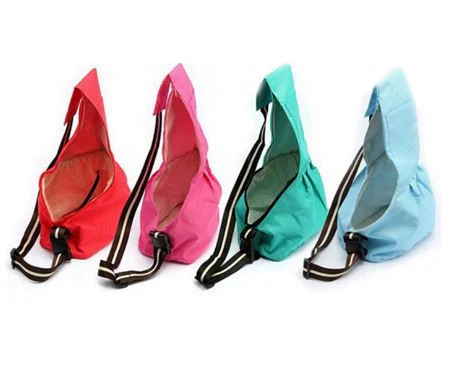
The Dog Sling: Support vs. Swaddle
Slings are different. They are designed for small dogs that are usually under 5kg who tire easily or get anxious in busy areas.
The danger with cheap slings is that they are just glorified shopping bags. They lack structure. The dog sits in a heap at the bottom, which puts pressure on their spine and hips.
A proper sling, like the Tailup Pet Sling, has a structured bottom and a distinct “scoop” shape. It holds the dog against your body, mimicking the feeling of being held in your arms. This compression is often calming for anxious dogs.
The Safety Checklist
The Internal Clip
The Base Stability
Press your hand into the bottom of the bag. Does it collapse instantly, or does it hold its shape? A solid base gives the animal confidence. If the floor feels unstable, they will panic.
The Zippers
Test the zippers. Locking zippers are best, but firm zippers are essential. A determined cat can nudge a loose zipper open with their nose.
Who Should Not Use Them?
If your dog is over 7kg, a sling will hurt your shoulder and likely hurt their back.
Pugs, Frenchies, and other flat-faced breeds struggle to cool down. Do not put them in a confined backpack on a hot day.
The Terrified:
Some animals simply hate confinement. If your cat hisses and urinates the moment they see the bag, do not force it. It is not worth the trauma.
Comparison: Sling vs. Backpack
| Feature | Pet Sling | Cat/Dog Backpack |
|---|---|---|
| Best For | Anxious small dogs, older dogs | Curious cats, hiking, travel |
| Interaction | High (pet is against your chest) | Medium (pet is on your back) |
| Airflow | Excellent (open top) | Good (mesh dependent) |
| Security | Medium (requires harness clip) | High (fully enclosed) |
| Weight Limit | Typically 5kg | Typically 7–8kg |
Getting Them Used To It
The biggest mistake people make is buying the carrier on Tuesday for a vet trip on Wednesday.
If the only time they see the bag is when something scary happens, they will hate the bag.
Leave the Waudog backpack or Tailup sling on the living room floor. Open it up. Put treats inside. Let them explore it on their own terms for a week. Let them sleep in it. By the time you lift them up, the bag should already feel like a safe space.
From Anxiety to Adventure
For a 14-year-old terrier with arthritis, a sling means they can still join the family on a long walk around Ivanhoe Park. For an indoor ragdoll cat, a backpack means they can smell the eucalyptus and watch the birds safely.
When you stop worrying about the judgment and start focusing on the engineering the clips, the mesh, or the base you realise these are not just toys. They are tools that let you spend more time with your best friend.
Check the clip. Check the airflow. Then get out there.