
Dog collars or harnesses: which is better for your dog?
A dog that pulls, coughs into the lead, backs out of their collar, or freezes when a harness goes over their head is not being difficult for no reason. They may be telling you the walking setup does not suit their body, confidence, or stage of training.
The simple answer is that many dogs should wear a collar for identification and a harness for walking. A calm adult dog can often walk well on a flat collar, but a harness is usually the better lead attachment point for puppies, small dogs, dogs that pull, and dogs that need lead pressure kept away from the throat.
At Belvedere’s Pet Supplies in Ivanhoe, we sell dog collars, harnesses, and leads through the shop and online Walk collection. We also see how different walking gear behaves through everyday dog walking, where fit, handling, and comfort matter more than how the product looks on a shelf.
Quick answer: when to use a collar and when to use a harness
The collar or harness decision depends on how your dog walks, not just their size or breed. A collar is still useful, but it is not always the best place to clip the lead.
| Use | Better choice | Why |
|---|---|---|
| ID tag and council registration tag | Collar | Keeps identification on the dog even when the harness is off |
| Calm loose-lead walking | Collar or harness | A flat collar can work if the dog does not pull |
| Small dog or delicate neck | Harness | Can reduce direct pressure on the throat |
| Dog that pulls or lunges | Harness | Gives better control and keeps lead pressure away from the neck |
| Short toilet break | Collar or harness | Choose the safest option for that dog |
| Dog that slips collars | Well-fitted harness | Helps reduce the chance of backing out of gear |
| Puppy | Washable mat, small cushion, or low-cost starter bed. | The puppy is still chewing bedding. |
For many dogs, the best setup is both: a collar for tags and a harness for the lead.
What dog collars are best for
Dog collars are best for identification, calm walking, and dogs that do not put pressure into the lead. A flat, well-fitted collar gives you somewhere to attach ID tags and can be enough for a dog that walks beside you without pulling.
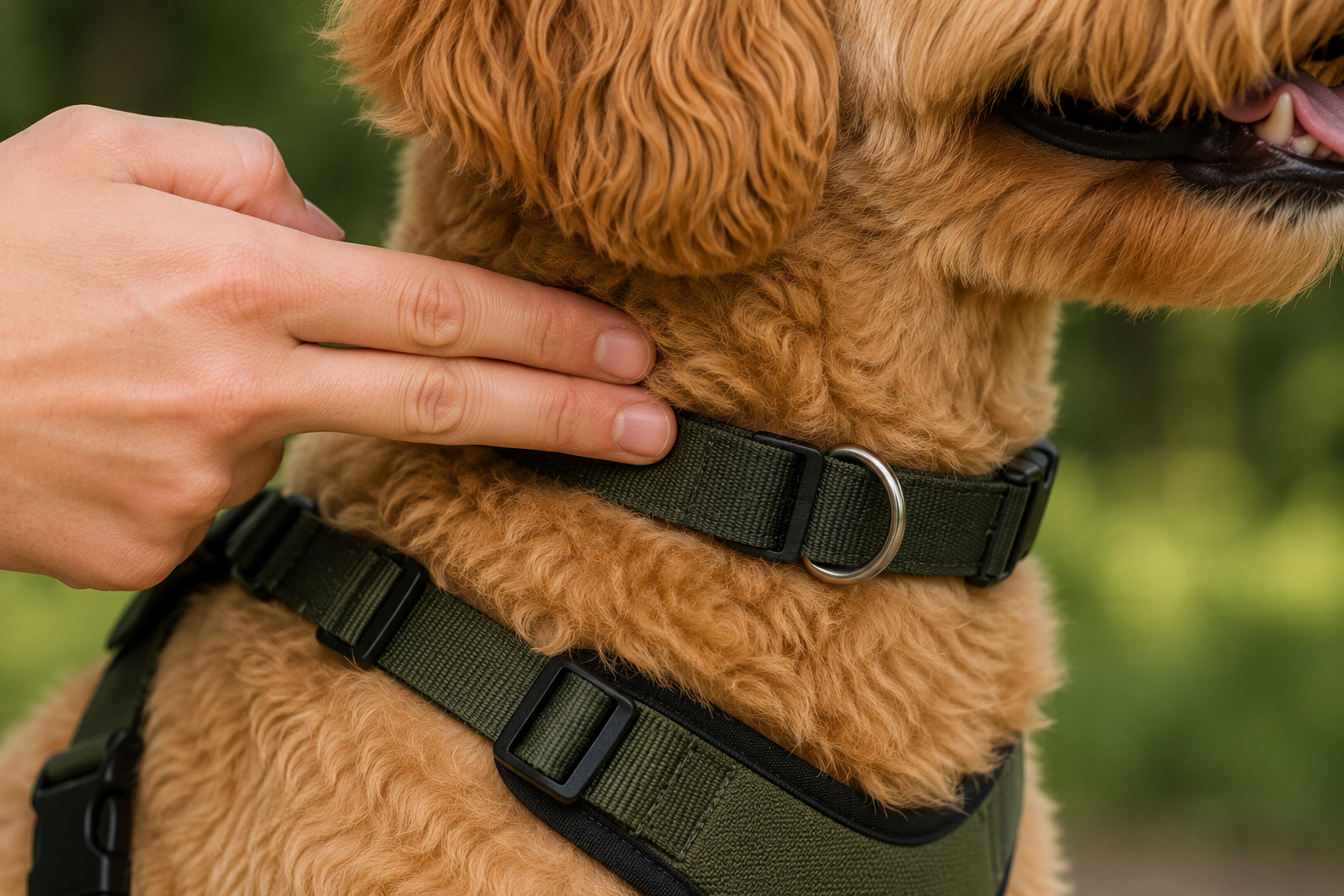
A collar should sit high enough that it does not slide loosely around the base of the neck. You should be able to fit two fingers under it, but it should not be loose enough to slip over the dog’s head. Check the fit again after grooming, weight changes, or a new haircut, especially with fluffy breeds.
A flat collar is very different from a correction-style collar. This article is about everyday flat collars, not choke chains, prong collars, or slip collars used to correct pulling. If your dog pulls hard, coughs, gags, or looks uncomfortable on a collar, clipping the lead to a harness is often the kinder and more practical choice.
A few collar types suit different needs:
- A lightweight padded collar: such as the Hunter Maui Vario Plus Dog Collar Large, suits everyday wear for larger dogs when the correct variant is available.
- A reflective, breathable collar: such as the Coralpina Cinquetorri Carezza Dog Collar range, suits dogs that need a washable walking collar with better visibility.
- A leather collar: such as the Dogue Foxy Dog Collar Pink, can suit owners who want a dressier collar for ID and calm walking, but it is not the right choice for beach, rain, or rough wet use.
- A waterproof rubber collar: such as the Gummi Stud Dog Collar Black, can suit dogs that get dirty or wet often, provided the size and fit are right.
- A patterned nylon collar: such as the Wau Dog DC Comics Dog Collar, can suit everyday ID wear where quick release and size range are useful.
A collar can look good and still be the wrong walking tool. If the dog is putting body weight into the lead, the decision should be based on control and comfort first.
What harnesses are best for
Harnesses are best for dogs that pull, puppies learning to walk, small dogs, nervous dogs, and dogs that need lead pressure spread across the chest and body. A well-fitted harness can make daily walks easier because the lead is no longer pulling directly against the throat.
The EzyDog Quick Fit Harness Small and EzyDog Quick Fit Harness Large are useful examples of an easy dog harness because they use a one-click buckle, adjustable chest strap, neoprene lining, reflective stitching, and a stainless steel lead attachment ring. The small and large versions both had several colour variants available at the time of checking, but stock should be rechecked before publication.
There are several harness styles, and they do not all solve the same problem:
- Back-clip harness: The lead clips on the dog’s back. This is simple for everyday walking and suits many dogs, but it may not give enough steering for strong pullers.
- Front-clip harness: The lead clips at the chest. This can help redirect some dogs that pull, though it needs correct fit and handling.
- Step-in harness: The dog steps into the harness before it clips up. This can suit dogs that dislike gear going over their head.
- Quick-fit harness: The harness is designed to go on quickly with minimal adjustment once fitted. This can help for wriggly dogs or owners who want a simple routine.
Harnesses do not train pulling away by themselves. They change where the pressure sits and can make the walk easier to manage. If a dog is highly reactive, lunges at other dogs, or is difficult to control, walking gear should be paired with help from a qualified trainer.
Harness vs collar by dog type
A harness vs collar decision becomes clearer when you look at the dog in front of you. Age, size, confidence, coat type, and walking behaviour all matter.
| Dog type | Better choice | What to check |
|---|---|---|
| Puppy learning to walk | Harness plus collar for ID | The harness should not rub under the front legs or restrict shoulder movement |
| Small dog | Harness plus lightweight collar | Choose a collar for tags, but avoid putting lead pressure on a delicate neck |
| Large dog that pulls | Harness | Look for secure fit, strong hardware, and a lead setup you can control |
| Calm adult dog | Collar or harness | A flat collar may be fine if the dog walks on a loose lead |
| Reactive or nervous dog | Secure harness plus collar for ID | Check fit carefully so the dog cannot reverse out |
| Dog that backs out of gear | Well-fitted harness | Avoid loose neck openings and test fit before leaving the shop |
| Long-eared or heavily coated dog | Collar or harness depending on walk style | Check that clips, straps, and buckles do not catch hair or ears |
| Older dog or dog with mobility concerns | Harness | Choose something easy to put on and gentle to handle |
For rescue dogs settling into a new home, a harness can be useful while you are still learning how they react to noise, traffic, other dogs, and new routines. That does not mean every rescue dog needs a harness forever. It means the early walking setup should make escapes and sudden pulling less likely.
Common fit mistakes
Good walking gear can still fail if it fits badly. These are the problems to check before the first proper walk.
- Too loose: The dog may be able to reverse out of the collar or harness, especially if startled.
- Too tight: The gear may rub, chafe, or restrict normal movement.
- Wrong attachment point: A back-clip harness may not give enough steering for a strong puller, while a front-clip harness needs careful fit.
- Harness sits too close to the front legs: This can rub under the arms and make the dog shorten their stride.
- Collar sits too low or too loose: Pressure shifts down the neck and control is reduced.
- Fashion before function: A smart collar is fine for ID, but the lead attachment still needs to suit the dog’s walking behaviour.
- No recheck after growth or grooming: Puppies, dogs changing weight, and long-coated dogs can outgrow a setup quickly.
Check the fit while the dog is standing, not curled up or sitting awkwardly. Then watch the first few minutes of movement. A harness that looks fine when still can show a rubbing point once the dog starts walking.
How to build a better walking setup
A good walking setup usually combines the right collar, harness, lead, and small accessories. One item should not have to do every job.
A practical setup often looks like this:
- Collar: Used for ID tags and council registration tag.
- Harness: Used for lead attachment when the dog pulls, is small, is young, or needs more control.
- Lead: Matched to the setting, with enough length for normal movement but not so much that the dog is hard to manage.
- Waste bags: Kept with the lead or walking pouch so they are always ready.
- Treat pouch or walking bag: Useful for training, nervous dogs, and longer outings.
The dog leads article should link here once this article is published, and this article should link back to it. The lead itself changes how the collar or harness feels in use. A short, strong lead creates a different walk from a longer training lead or hands-free walking setup.
Choosing gear at the shop or online
If you already know your dog’s measurements and walking style, the Walk collection is the best place to compare collars, harnesses, leads, and walking accessories online. Check size, material, attachment points, and current variant stock before choosing.
If you are unsure about fit, bring your dog into Belvedere’s Pet Supplies at 93 Upper Heidelberg Road, Ivanhoe, if practical. Fit is easier to judge when the dog is standing in the gear, especially for puppies, small dogs, nervous dogs, strong dogs, and dogs with unusual body shapes.
For dogs that cough, seem sore, limp, suddenly refuse walks, or show unusual behaviour when walking gear goes on, speak with a vet. For dogs that lunge, panic, or are hard to control, a qualified trainer can help you match the gear to a safer walking plan.
FAQs
Should my dog wear a collar or harness?
Many dogs should wear both. A collar is useful for ID tags, while a harness is often better for walking if the dog pulls, is still learning, or has a small or delicate neck.
Can my dog wear both a collar and a harness?
Yes. Many dogs wear a collar for identification and a harness for the lead. This is often the most practical everyday setup.
Is a harness better for a dog that pulls?
A harness is often better for a dog that pulls because it moves lead pressure away from the throat and gives the owner more control. It will not stop pulling by itself, so training still matters.
What collar is best for a small dog?
A small dog usually needs a lightweight, flat collar that fits securely without adding bulk. For walking, many small dogs are more comfortable with the lead attached to a harness rather than the collar.
How tight should a dog collar be?
A dog collar should be snug enough that it cannot slip over the head, but loose enough for two fingers to fit underneath. Recheck the fit as your dog grows, changes weight, or has a haircut.
How should a dog harness fit?
A harness should sit securely around the chest without rubbing under the front legs or restricting shoulder movement. It should not twist, gape, or slide around when the dog walks.
Can a harness stop pulling?
A harness can make pulling easier to manage, but it does not train the behaviour away by itself. Dogs that pull hard usually need the right harness, the right lead, and consistent loose-lead training.