
Why Dogs Like Barbell Toys
Some dogs ignore a basket full of toys, then keep going back to one barbell-shaped toy as if it has some obvious advantage. In many cases, it does. Not because the shape is clever or novel, but because it suits the way that dog likes to grab, carry, chew, and revisit a toy after the first burst of excitement is over.
A barbell toy can make sense to a dog in a very practical way. It usually offers more than one bite point, feels stable in the mouth, and behaves differently from a ball once it is thrown or dropped. That combination is enough to keep some dogs interested when rounder or flatter toys get left behind.
Quick answer
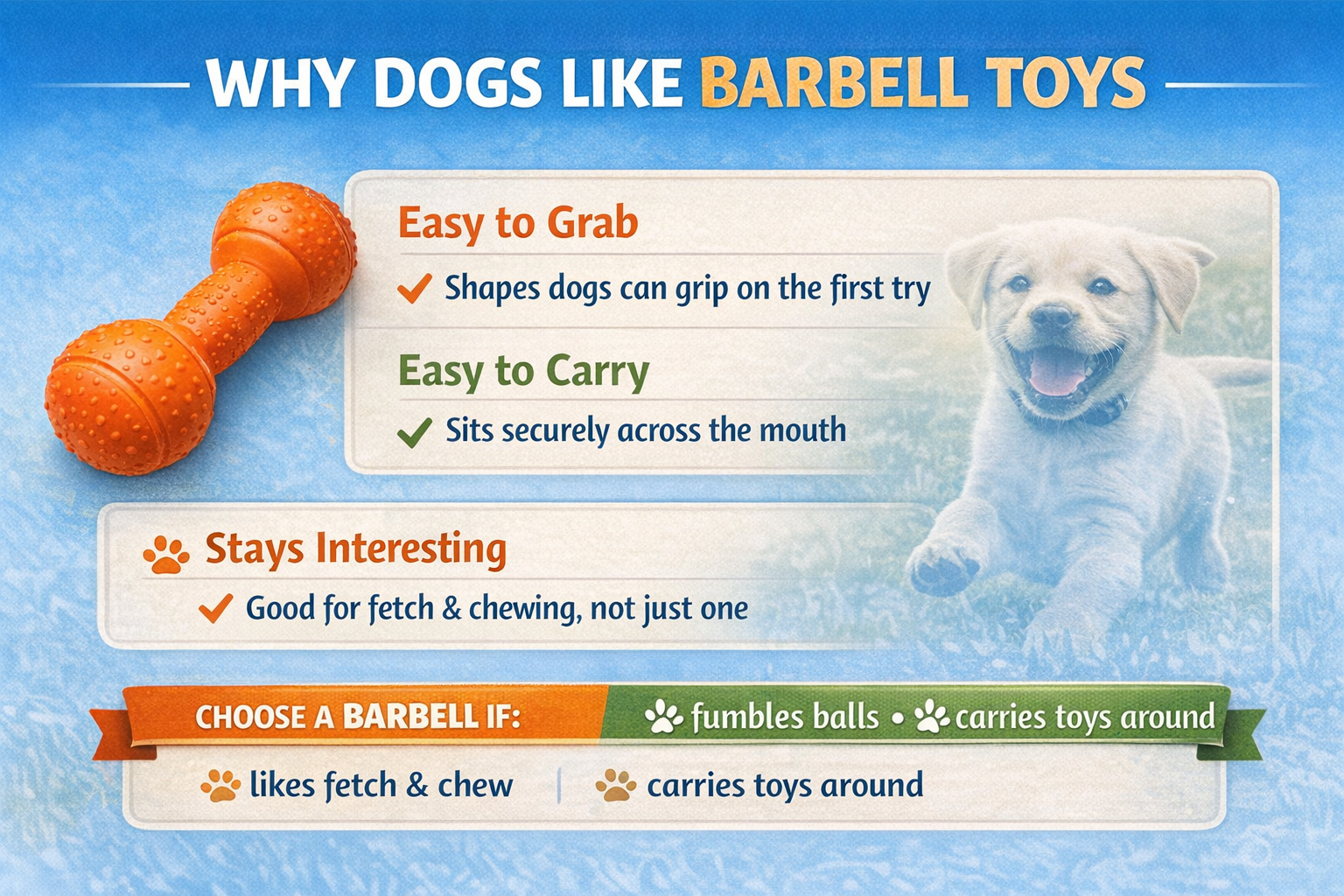
Many dogs like barbell toys because the shape is easy to pick up, comfortable to carry, and still satisfying to hold when the toy is no longer moving.
That does not mean every dog prefers them. Some dogs still want a ball, a plush toy, or a flatter tug shape. But for dogs that like carrying toys around, switching between fetch and chewing, or getting a cleaner first grip, a barbell often gives them more to work with than a simpler shape.
| What the shape does | Why some dogs like it |
| Distinct ends | Easier to see where to bite |
| Narrower centre | Can feel easier to hold across the mouth |
| Balanced but not fully round | May roll or bounce in a more interesting way |
| Holds still better than a ball at rest | Stays engaging even when the chase ends |
Why shape matters more than people think
People often focus on material first. Soft, rubbery, tough, squeaky, floatable. All of that matters, but shape changes the toy in a more basic way. It affects the pickup, the grip, the carry, and how the toy behaves on the ground.
A smooth ball gives the dog one simple job. Chase it, get around it, bring it back. A barbell offers a bit more definition. The dog can target an end, adjust to the centre, or mouth the toy in different ways without needing to swap to a different object.
That is part of why some dogs keep returning to the same shape. They are not always showing a strong preference for one material or one brand. Sometimes the shape just fits the way they use their mouth and body during play.
You can see this when a dog loses interest in toys that look fine on paper. The issue is not that the dog is difficult or bored with play. The toy may simply not suit how that dog likes to pick things up or carry them around.
Mouth feel and bite points
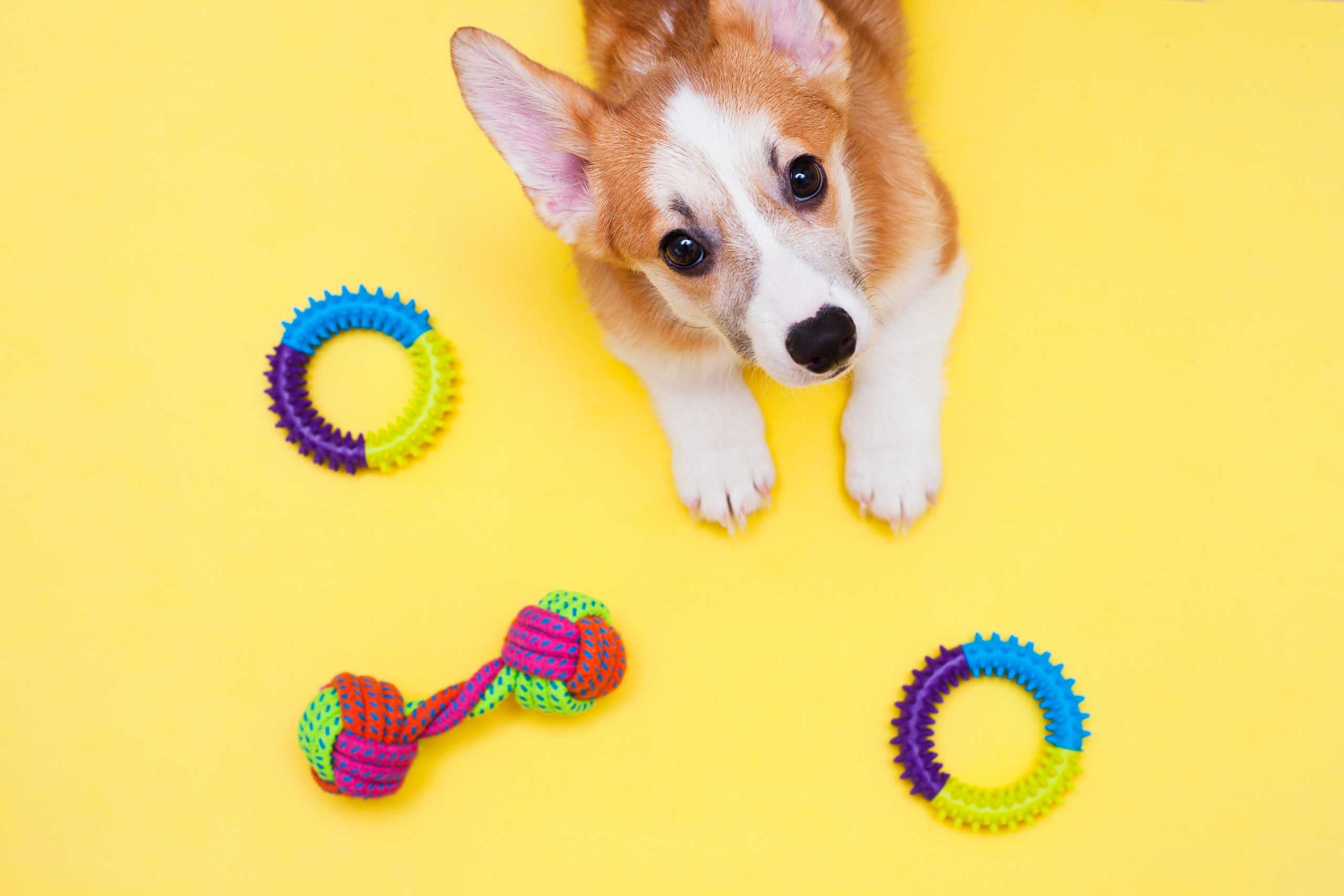
A barbell toy usually gives the dog more than one obvious place to grab. The enlarged ends stand out. For some dogs, that makes the first pickup easier than it is with a toy that has one smooth, uniform surface.
That matters on the floor, in the yard, and during fetch. Some dogs get a cleaner first grip on a barbell than on a ball because they can come in from the side and catch one end rather than trying to get their mouth around a full round shape. If a dog tends to fumble smooth toys, that can be enough to change the whole experience.
The centre section matters too. On many barbell toys, the middle is narrower than the ends. That can make the toy feel secure in the mouth without being too bulky through the middle. Some dogs seem to like that balance. They can grip, reposition, and settle the toy without much effort.
That ease of repositioning often gets overlooked. A dog may pick up a toy quickly, adjust it once or twice, then carry it happily. With other shapes, the dog keeps fussing with the grip or drops the toy sooner. A barbell shape can reduce that awkwardness because the dog has distinct sections to work with.
It is not complicated science. It is just a shape that often gives the dog somewhere obvious to bite, then somewhere comfortable to keep holding.
Why they are often easy to carry
Some dogs do not just want to chase a toy. They want to carry it around the house, the yard, or on the way back from a throw. A barbell shape often suits that habit.
Because the toy has structure at both ends and a narrower section through the middle, it can sit across the mouth in a stable way. It feels present, but not necessarily awkward. Many dogs can hold it without needing a very wide grip, and without the toy shifting around as much as a straight, even shape sometimes does.
A ball can work for carrying, but it can also feel all-or-nothing. The dog either has a solid grip or it does not. A barbell gives the dog more ways to hold the toy securely. That can make it more appealing for dogs that like to parade a toy around rather than just sprint after it and drop it.
The shape also helps when the toy is at rest. A ball tends to roll away. A barbell often stays put more easily. That makes it simpler for the dog to nudge, re-grab, or settle with the toy after movement stops. For dogs that like keeping a toy nearby, that small difference can matter a lot.
How the chase feels different
Barbell toys do not move like balls, and that is part of their appeal.
A ball gives you a familiar pattern. It bounces, runs on, and can change direction quickly. Some dogs love that. Others seem to enjoy something a bit less uniform. Depending on the material and the throw, a barbell toy may bounce, skid, hop, or veer slightly. That movement can keep the dog interested without turning the chase into a scramble.
The shape can create a middle ground between a pure fetch toy and a chew toy. It moves enough to start the game, but once the toy stops, the dog may still want it in the mouth. That is a useful trait for dogs that lose interest as soon as the movement ends with other toys.
This is one reason barbell toys can work well for mixed play styles. A dog may chase the throw, pick the toy up, carry it off, chew it for a minute, then bring it back into play again. The shape supports all of those stages without asking the dog to change objects.
Why some dogs choose a barbell over a ball or bone
A barbell often sits between common toy shapes in a useful way.
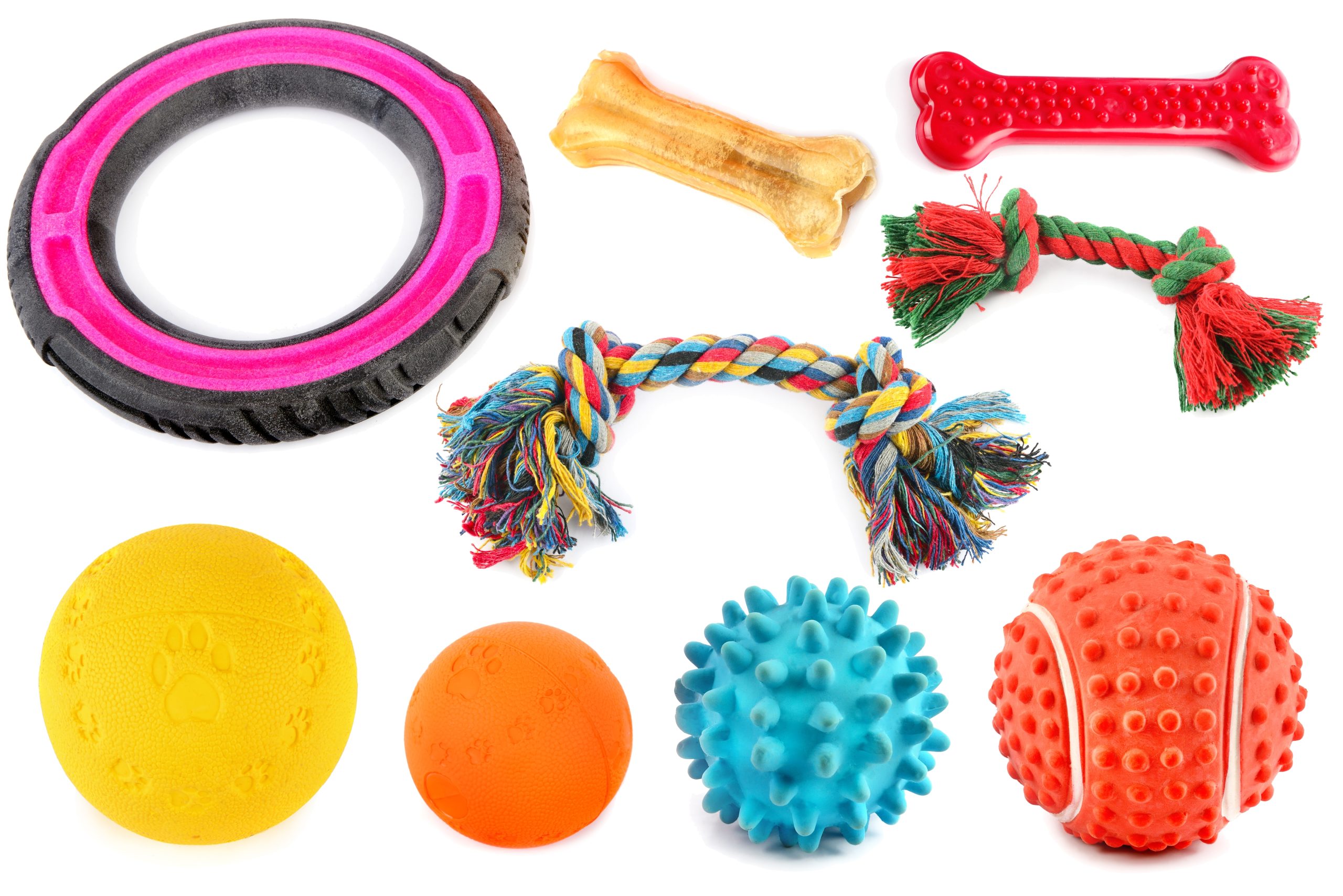
Compared with a ball, it usually offers clearer bite points and a more secure carry. Dogs that fumble round toys sometimes find a barbell easier to pick up and keep hold of.
Compared with a bone-shaped chew toy, a barbell can feel more balanced for movement-based play. It is often easier to throw and can behave in a more lively way on the ground. That makes it more suitable for dogs that want one toy that can be chased and chewed, not just gnawed on in one spot.
Compared with a straight chew toy, the barbell shape has more definition. That matters for dogs that seem to like toys with distinct ends or toys they can rotate and regrip without much effort.
Some dogs also return to barbell shapes because they stay interesting even when they are not moving. A ball can be brilliant in motion, then less compelling once it stops. A barbell can still feel good to mouth, carry, or settle with after the action slows down.
When a barbell toy makes more sense
A barbell shape often suits dogs that:
- like carrying toys after fetch instead of dropping them straight away
- fumble smooth or round toys on the first pickup
- want one toy that works for chase, carry, and chew play
- keep returning to toys that feel good in the mouth, even at rest
- seem to enjoy regripping and repositioning a toy as they play
This is also a useful shape for dogs that get bored when a toy only does one thing. A ball is great for classic fetch. A barbell can cover more ground. It can be thrown, mouthed, parked between the paws, carried room to room, then brought back into play later.
That does not make it better in every setting. It just makes it more versatile for certain dogs.
When it may not be the right fit
Some dogs still prefer a compact round toy. They want speed, bounce, and a very simple chase. For them, a ball can remain the better choice.
Others like plush toys because they are soft to carry, or tug shapes because they are easier to grip in a pulling game. A barbell can feel too firm, too structured, or simply less appealing to those dogs.
Preference also changes with play style. A dog that loves throwing itself after a fast-moving ball may not care that a barbell is easier to carry. A dog that likes to settle with a toy may not care how well it bounces. Shape matters, but it is still only part of the picture.
What to take from it
Dogs often like barbell toys for simple, practical reasons. The shape gives them obvious bite points, a comfortable carry, and a toy that stays useful after the first chase. It can suit dogs that want more than a quick sprint and a clean return.
If a dog keeps choosing a barbell over other shapes, that preference is usually telling you something useful. The toy may be easier to grab, easier to hold, or simply more satisfying to keep around. For many dogs, that is enough.
When a barbell toy makes more sense
Why does my dog love barbell toys?
Many dogs like barbell toys because they are easy to grab, comfortable to carry, and still enjoyable to hold once the toy stops moving.
Are barbell toys easier for dogs to carry?
For many dogs, yes. The narrower centre and fuller ends can help the toy sit more securely across the mouth than a smoother, more uniform shape.
Do barbell dog toys work for fetch?
They can work very well for fetch, especially for dogs that like to pick up the toy and keep carrying it after the throw. They usually move differently from a ball, with more skid or uneven bounce.
Why won’t my dog play with balls but likes barbell toys?
Some dogs find a barbell easier to pick up and reposition in the mouth. A ball can feel harder to grip cleanly, especially for dogs that fumble smooth, round shapes.
Are barbell toys better than bone-shaped toys?
Not always. Barbell toys often suit dogs that want one toy for throwing, carrying, and chewing. Bone-shaped toys may suit dogs that mostly want to settle down and chew.
Do some dogs find barbell toys easier to pick up?
Yes. The defined ends can give dogs a clearer target for the first bite, which can make pickup easier than it is with a smooth ball or a flatter toy.
What makes one toy shape more appealing than another?
Usually a mix of grip, carry comfort, movement, and how the toy feels in the mouth. A dog is not always rejecting play when it ignores one toy. Sometimes the shape just does not suit it.